






The industrial landscape is undergoing a structural redefinition, driven by the increasing need for digitalization and higher operational efficiency. In the state of Bahia, this transformation is not merely a market trend, but a coordinated movement focused on integrating Industry 4.0 concepts into the practical reality of micro and small enterprises.
To accelerate this process, Altus and SENAI CIMATEC (SENAI stands for National Service for Industrial Training in Brazil, an institution focused on vocational training, technical education, innovation, and the provision of technological services for industrial development) have joined forces to implement industrial traceability solutions based on the XP340 PLC in Bahia.
This partnership demonstrates, in practice, how automation technologies tailored to the local production environment can increase visibility into production processes, improve operational control, and enhance corporate competitiveness. Learn more about the project in this article.
Traceability as a strategic necessity
Industrial traceability is the ability to record and track a product’s history throughout the entire supply chain and manufacturing processes. Through this control, it is possible to identify the origin of raw materials, processing conditions, the operators involved in each stage, and the final destination of the produced batches.
In the context of Industry 4.0, this practice is expanded and enhanced by integration with technologies such as the Internet of Things (IoT), cloud computing, and real-time data analysis, allowing for greater transparency, operational control, and data-driven decision-making throughout the entire cycle.
Despite its importance to industrial evolution, the adoption of traceability systems still faces barriers, especially among small producers. Data management complexity, hardware and software acquisition costs, and a shortage of skilled labor to operate advanced systems are among the primary factors hindering implementation.
Nevertheless, when properly applied, traceability becomes a powerful mechanism for operational optimization and identifying production bottlenecks. By allowing each item to be tracked through every stage, including the dwell time in each phase, managers gain a clear view of the production flow, resulting in higher operational efficiency and cost reduction.
Nexto XP340 and the advantages for Industry 4.0 integration
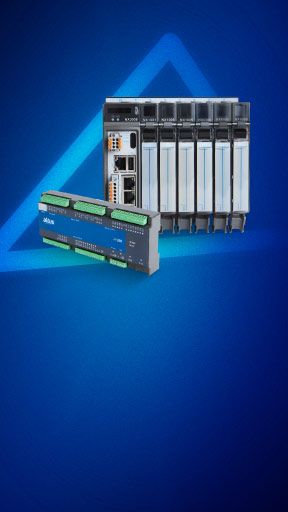
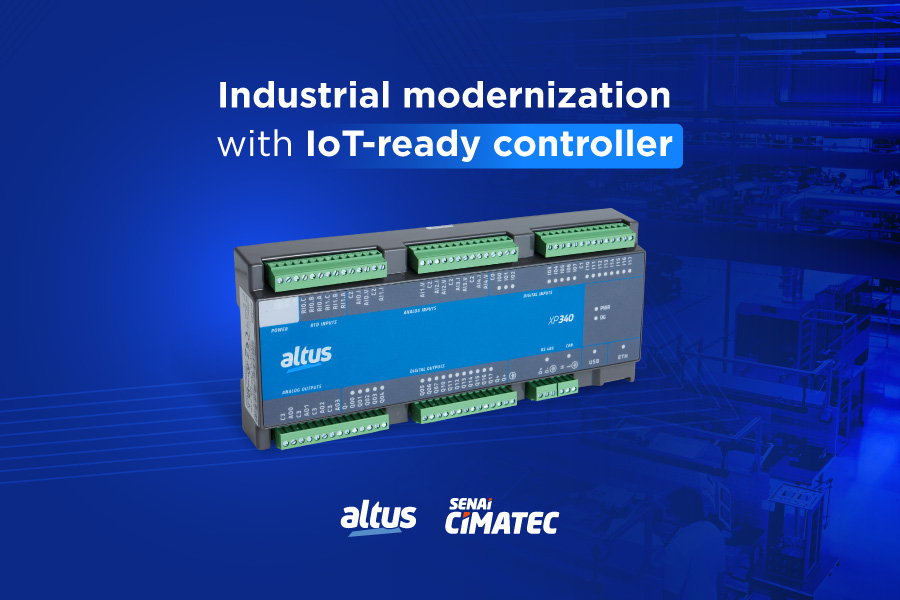
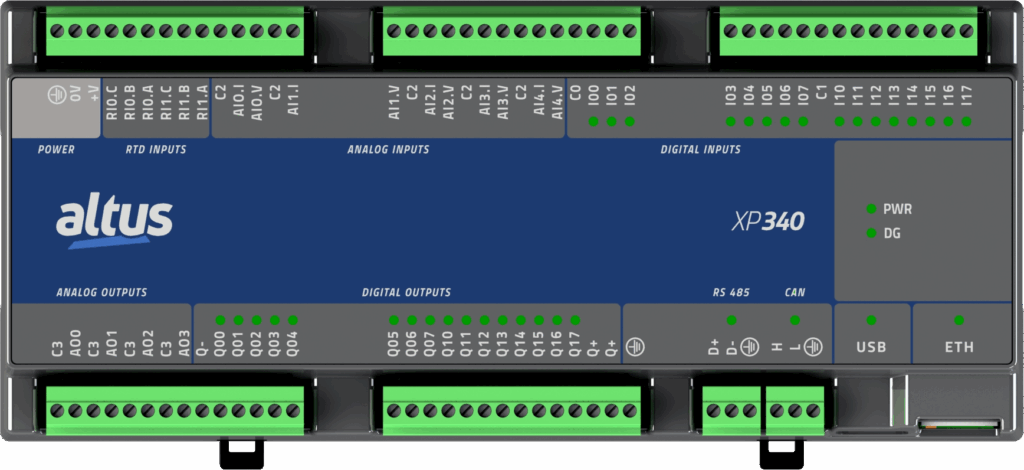
The XP340 is a compact, IoT-ready controller designed to meet Industry 4.0 challenges in applications requiring high connectivity, even in space-constrained environments.
Its architecture is based on a high-performance 32-bit ARM processor, capable of executing program scan cycles in less than one millisecond. This performance ensures high precision in data acquisition and processing from sensors and field devices, an essential factor for industrial traceability and process monitoring applications.
Furthermore, its robust construction, combined with support for advanced cybersecurity features such as embedded VPN and firewall, ensures that traceability data is transmitted securely between the factory floor and management systems.
| Feature | Specification | Impact on Traceability |
| Digital inputs | 16 points 24 Vdc (optoisolated) | Monitoring of machine states and presence sensors |
| Digital outputs | 16 transistor points (optoisolated) | Control of actuators, indicators, and labeling machines |
| Analog inputs | 5 (V/I) + 2 (RTD) 12-bit | Measurement of weight, pressure, temperature, and input flow |
| Analog outputs | 4 points (V/I) | Proportional control of valves and frequency inverters |
| Communication interfaces | Ethernet, RS-485, CAN, and USB | Full integration with IT networks and peripheral devices |
| Supported protocols | MQTT, OPC UA, EtherNet/IP, PROFINET, MODBUS | Flexibility to connect with different systems and clouds |
| Embedded WebServer | Available via web browser | Visualization of indicators without the need for SCADA software |
The role of the MQTT protocol in the application
For traceability to be truly effective, collecting data is not enough; it is also necessary to transmit, organize, and visualize it intelligently. Therefore, the solution developed by the Altus/SENAI partnership used the MQTT protocol as the primary method for data communication.
MQTT (Message Queuing Telemetry Transport) is a lightweight, efficient messaging protocol widely used in IoT applications and machine-to-machine (M2M) communication. This protocol utilizes a publish/subscribe model, in which devices publish data to topics and interested systems subscribe to these topics to receive the information, making communication more flexible, scalable, and efficient.
In the context of industrial automation applied to micro and small enterprises (MSEs), using MQTT offers several benefits, including:
- – Low bandwidth consumption: messages have minimal headers, allowing data transmission even over unstable or low-speed internet networks common in industrial areas.
- – High reliability: the protocol defines three levels of Quality of Service (QoS), ensuring that critical traceability messages (such as a batch failure alert) are delivered exactly once to the recipient.
- – Operational security: it supports user/password authentication and TLS encryption, protecting intellectual property and the integrity of factory data.
- – Asynchronous communication: the PLC publishes data to “topics” on the MQTT broker, and any authorized device can subscribe to receive these updates instantaneously.
Integrating PLC and Grafana
The integration of the XP340 with Grafana allows managers to track production in real time through customized dashboards. Grafana is an open-source platform widely used for data monitoring and analysis, capable of connecting directly to MQTT brokers or time-series databases.
With this tool, raw data collected by sensors, such as temperature, weight, and cycle time, can be transformed into clear and intuitive visual indicators, including productivity gauges, trend charts, and quality monitoring panels. Dashboard access can be performed both locally, within the factory, and remotely via smartphones, tablets, or computers, offering greater mobility and visibility for industrial management.
To ensure historical traceability, enabling the analysis of production events and data over months or years, the architecture recommends using dedicated storage mechanisms, such as Loki or SQL databases.
To achieve this, the XP340 features native function blocks (MSSQL_CLIENT), which enable direct data writing to Microsoft SQL Server databases, facilitating the generation of reports, historical analysis, and long-term quality control.
Architecture implementation methodology
The simple acquisition of technology does not guarantee digital transformation. SENAI CIMATEC applies a structured methodology to ensure that traceability generates fast and measurable results for industries in Bahia.
The implementation process is focused on the reality of each plant, following four fundamental stages:
- – Diagnosis and mapping: CIMATEC consultants conduct a study of the company’s production flows to identify critical points and define which information is essential for the solution’s application.
- – Collection and integration strategy: Based on the diagnosis, the architecture is defined. The XP340 is configured to collect data from sensors and integrate it via MQTT into Grafana dashboards or existing management systems.
- – Gradual deployment: The solution is implemented modularly. This allows the company to start with a low investment, validating results before scaling up.
- – Training and qualification: CIMATEC provides training for operation and maintenance teams so they can interpret indicators and perform continuous process adjustments based on concrete data.
The future of industrial traceability
The vision for the future of the partnership between Altus and SENAI CIMATEC points toward the regionalization of industrial development in Bahia and Brazil as a whole. The CIMATEC Sertão project, focused on the Bahia semi-arid region, aims to apply automation technologies to regional production chains, such as biomass and ethanol generation.
The digitalization of micro and small businesses is essential to ensure the competitiveness and efficiency of these production hubs. Therefore, accessible and connected automation solutions play a strategic role in modernizing these operations.
The ruggedness of the XP340, combined with its wireless communication capability through Wi-Fi adapters or 3G/4G modems connected via USB port, makes the controller a particularly suitable solution for applications in remote areas where wired network infrastructure is limited or nonexistent. This connectivity flexibility enables traceability data to be transmitted even in scenarios with infrastructure constraints, expanding the technology’s reach.
This partnership between Altus and SENAI CIMATEC represents an important milestone in the democratization of Industry 4.0 in the state of Bahia. With the implementation of traceability systems, the industry in Bahia gains in control, transparency, and operational efficiency. Managers gain expanded visibility of the operation, being able to track production indicators in real time, quickly identify failures, and ensure the quality standards required by today’s market.
This digital transformation journey, started on the factory floor, demonstrates that technology, when applied in a structured way and with the right support, becomes one of the primary drivers for sustainable growth and industrial strengthening.