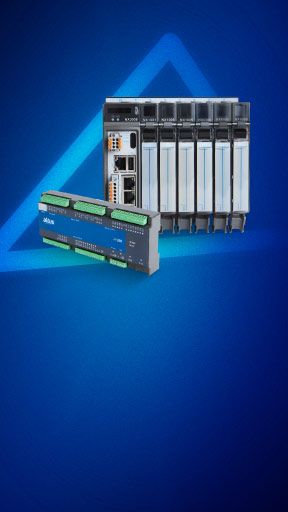







The global industry is undergoing an unprecedented transformation, where the boundary between the factory floor and digital systems is becoming increasingly blurred.
In this context, the ability to process data in real time, ensure cybersecurity, and offer a flexible, scalable engineering environment has become a matter of competitive survival. Altus understands this dynamic and acts strategically to meet these new demands.
As mentioned in our previous article regarding the Nexto XF series, the new controllers are arriving on the market alongside the next generation of our programming software: Mastertool X, which you can download here.
In this article, you will be able to follow the evolution of the Mastertool platform and check out the main innovations and advancements this new version brings to industrial automation.
The Shift to 64-bit: Increased Speed and Processing Power
For years, Mastertool (MT8500) served as the standard version for providing robustness and compliance with the international IEC 61131-3 standard. However, as automation projects scaled and algorithmic complexity grew exponentially, the need for a modernized development infrastructure became evident.
Mastertool X was born from this necessity. Based on the maturity of version 3.77, the new version 4.0.0 establishes a more modern foundation, capable of improving performance while ensuring the scalability required to incorporate future features without the limitations of legacy architectures.
That said, one of the highlights of Mastertool X is its native support for 64-bit architecture. Historically, PLC programming tools operated in 32-bit environments, which imposed limitations on memory addressing and, consequently, on the size and complexity of projects that could run simultaneously.
With the transition to 64-bit, Mastertool X enables greater processing capacity and scalability. In practice, this translates into a more fluid engineering experience: compile times for extensive projects are reduced, navigation between multiple POUs (Program Organization Units) becomes faster, and library management occurs without performance degradation.
Furthermore, this evolution allows for much more efficient RAM usage in applications involving advanced control logic, elaborate WebVisu interfaces, and large volumes of symbolic variables. The result is a more robust development environment capable of meeting the increasing demands of intelligent automation.
New Project Wizard: Practicality and Enhanced User Experience
Automation engineering is often a race against time. The initial stages of a project, such as hardware configuration and network task definition, can consume valuable hours. Recognizing this challenge, Altus has improved the Project Wizard in Mastertool X.
This tool leads the user through an intuitive and guided workflow. When starting a new project, the wizard presents an updated selection of devices, making it easier to choose the correct components from the very beginning. Its logic was developed to reduce the learning curve for new users while offering speed and practicality for veterans of the platform.
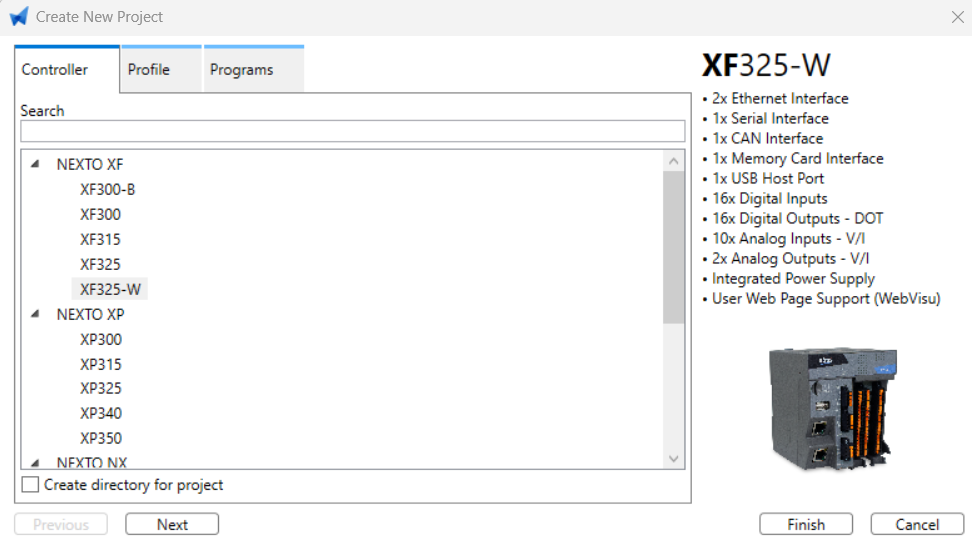
With the Project Wizard, users can, in just a few clicks, structure the rack, pre-configure communication interfaces, and load essential libraries for the application. This minimizes configuration errors (which are often only identified during field commissioning), contributing to reduced rework, lower operational costs, and faster project delivery times.
Project Profiles: Flexibility and Standardization
Complementing the new Project Wizard, Mastertool X also introduces an update to the Project Profiles feature.
This resource allows for the creation and utilization of standardized configurations, ensuring that engineering standards are consistently maintained across all projects. Flexibility in managing IEC Tasks and POUs (Program Organization Units) makes it possible to structure the application in a modular and organized way, selecting different programming languages as needed for each part of the system, all within a clear and efficient hierarchy.
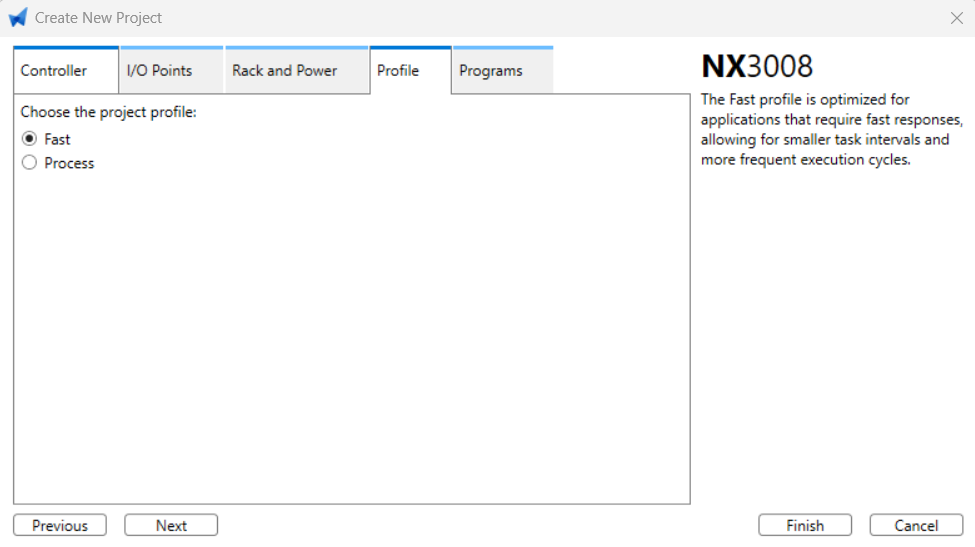
This modularity enables code reusability; in a scenario where agility is decisive, the ability to encapsulate control logic into reusable function blocks and apply them to new projects represents a significant gain in productivity.
In this way, Mastertool X not only standardizes development but also enhances the efficiency, scalability, and consistency of automation applications.
Nexto NX CPUs with more memory for demanding applications
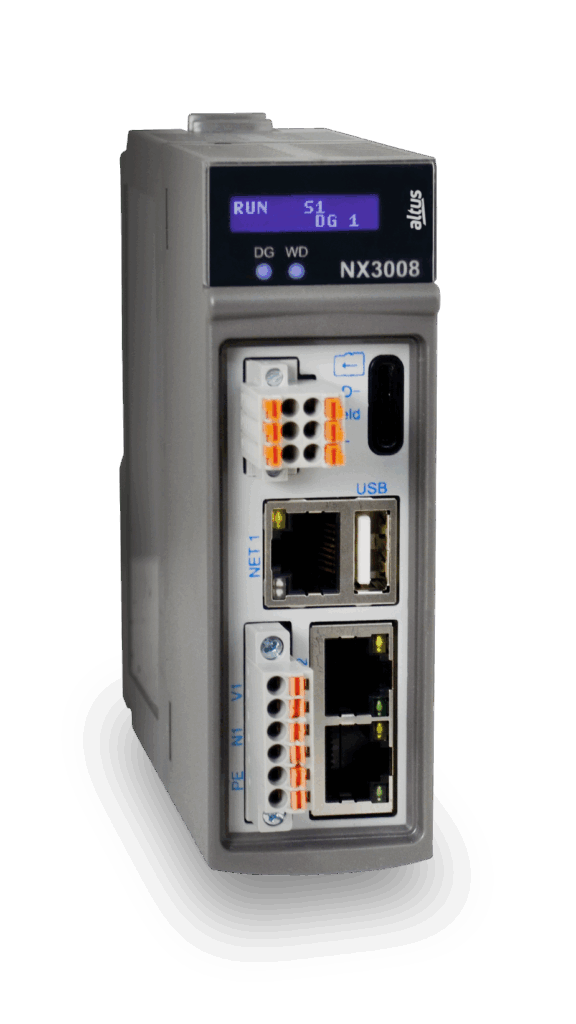
In addition to full support for the new Nexto XF series controllers, Mastertool X also brings updates to the established Nexto NX series CPUs, such as the NX3008 and NX3035 models, enhancing performance and expanding data management capacity.
In large-scale projects, the main bottleneck is often not code execution speed, but the capacity to store, organize, and provide symbolic variables to higher-level systems like SCADA, HMIs, and MES platforms.
Through optimizations in the compiler and development environment resource management, Mastertool X enables the expansion of the symbolic memory capacity of these CPUs, enabling more complex applications with higher data volumes and more efficient integration with enterprise systems:
NX3008 CPU: From 12 MB to 40 MB.
NX3035 CPU: From 20 MB to 48 MB.
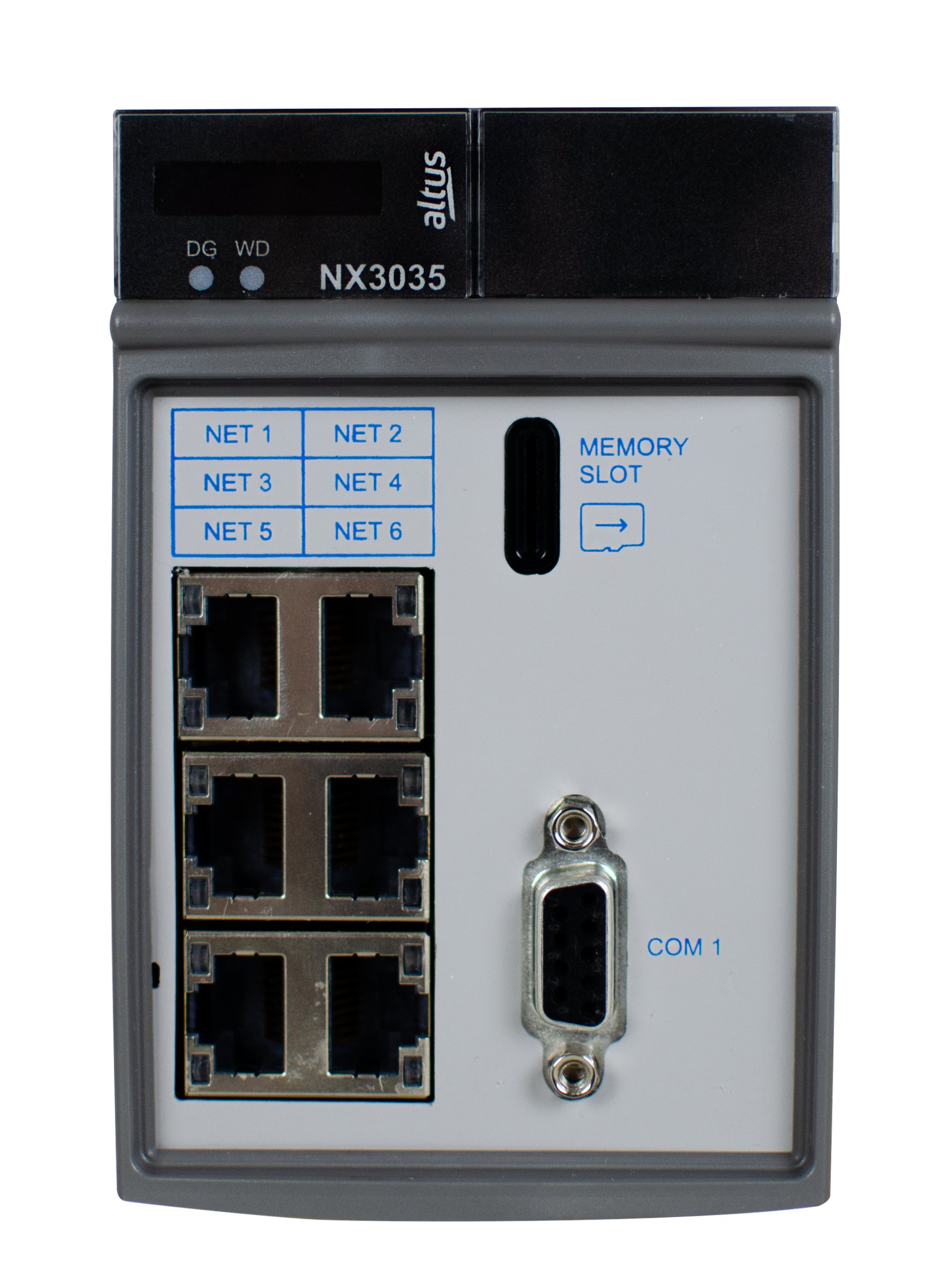
This advancement represents an increase of over 200% in storage capacity for tags and data structures. In practice, this allows for the development of projects with a higher level of detail and diagnostics, sending thousands of additional process parameters for Big Data analysis and predictive maintenance algorithms without worrying about CPU memory exhaustion.
The NX3008, designed to be a global CPU, thus gains even more power to operate in complex control architectures where interaction with multiple devices and heterogeneous systems is constant.
With Mastertool X, its high processing capacity, equivalent to executing 1,000 instructions every 16 microseconds, is now paired with expanded addressing capacity, supporting up to 32,000 digital points and 8,000 analog points, totaling 40,000 control points.
Compatibility with the Latest Nexto System Models
Mastertool X was developed to be the definitive programming environment for Altus’s most recent equipment series. In addition to the previously mentioned Nexto XF and Nexto NX series, the software also offers full support for the Nexto XP series, the HX3040 RTU, and the NL717 data logger.
- Nexto XP: This series of compact, IoT-ready PLCs remains one of Altus’s pillars of versatility. With Mastertool X support, models such as the XP340 benefit from communication drivers optimized for EtherCAT Master and cloud protocols.
- HX3040: Part of the HX (Xtorm) series, aimed at critical infrastructure and power generation, support in Mastertool X ensures that applications requiring high availability and redundancy operate with maximum reliability.
- NL717: Native support enables the management of complex Remote I/O architectures with the same ease as a local application.
By enabling the standardization of all development within a single tool, Mastertool X reduces costs related to training, the maintenance of multiple environments, and system integration, while increasing project efficiency and consistency.
Discover the New Mastertool Licensing Model
The Mastertool X licensing model has been simplified to become more flexible and aligned with the diverse project realities within the industry. The new structure is based on two primary categories: Lite and Advanced.
- – Lite Version: Maintains Altus’s tradition of accessibility, being free of charge for applications with up to 320 I/O points. This version is ideal for small-scale machine builders, building automation projects, and academic environments, allowing new professionals to build their skills without upfront costs.
- – Advanced Version: Represents the full power of the tool. Designed for large-scale applications, critical processes, and systems requiring CPU redundancy, this version offers all software features without limitations. The major innovation lies in the procurement flexibility: users can choose between annual subscriptions or perpetual licenses, allowing companies to align their investment with their financial planning.
Read the complete Mastertool X user manual
This transition simplifies software asset management in industrial settings by eliminating the need to manage multiple sub-versions, such as the former Basic and Professional editions, and focusing on two clear usage paths.
Whether in smaller applications or distributed control systems (DCS) with thousands of points, Mastertool consolidates itself as the technological foundation for developing increasingly modern, scalable solutions aligned with the demands of the new industry.