





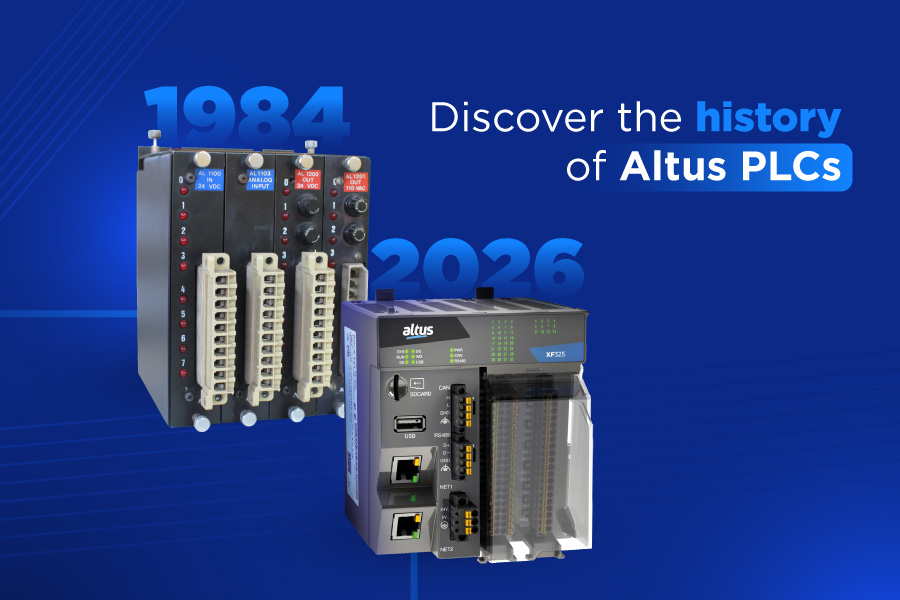
Founded on October 26, 1982, during a period when Brazil sought to consolidate its technology industry under the informatics market reserve policy, Altus was born from the vision of engineers Ricardo Felizzola and Luiz Francisco Gerbase.
The chosen name, derived from Latin and associated with meanings such as “noble” or “elevated,” reflected the company’s purpose from the very beginning: to raise the level of technology developed in Brazil, contributing to the strengthening of national engineering and the advancement of automation in the country.
Over more than 40 years, Altus has not only kept pace with the global evolution of electronics and software but has positioned itself at the forefront, transforming geographical and technical challenges into innovation milestones that today support the country’s critical infrastructure, from ultra-deepwater oil exploration to providing electricity for millions of Brazilians.
The beginning of it all: meet the AL Series
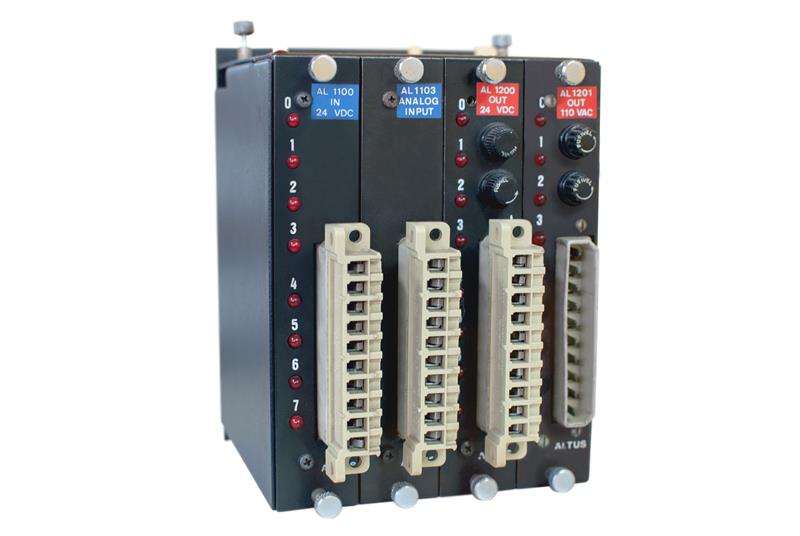
In the 1980s, industrial automation in Brazil was synonymous with technological dependence. National industries seeking to modernize their processes were forced to rely on imported equipment, which had prohibitive costs and distant technical support. In this scenario, in 1984, Altus launched one of the first PLCs (Programmable Logic Controllers) fully developed and manufactured in Latin America: the AL-1000.
The AL-1000 prioritized simplicity of operation, compact design and, fundamentally, economic accessibility. This device allowed small and medium-sized Brazilian industries to take their first steps in the transition from relay logic to digital programmable control. The AL Series quickly expanded, diversifying to meet everything from micro-applications with the AL-500 to large control systems with the AL-1000/512.
Complementing this pioneering phase, in 1986, the company introduced the Destro Numerical Control. Unlike traditional PLCs, the Destro was a device with digital technology based on a computer architecture, whose differentiator lay in the software. Its versatility allowed applications in robotics, winding machines, and clutch control, demonstrating that automation intelligence was migrating from rigid hardware to flexible software.
| Model | Release Year | Key features |
| AL-1000 | 1984 | First Altus PLC and one of the first in Latin America, designed as an alternative to imported equipment. Compact and low-cost. |
| CNC Destro | 1986 | Software-based Computer Numerical Control for automation. |
| AL-2000 | 1991 | Introduction of multiprocessing and the ALNET II network. |
Multiprocessing and redundancy with the AL-2000 Series
As industrial processes became more complex, the demand for processing speed and reliability grew. In 1991, Altus responded to this challenge with the launch of the AL-2000 Series, a system that introduced the concepts of multiprocessing and advanced connectivity for its time.
The AL-2000 was the heart of the ALNET II multi-master network, a communication interface operating on the RS-485 physical standard with speeds of up to 1 Mbps. This innovation allowed multiple controllers to share information deterministically, enabling the creation of more robust and distributed control architectures. In 1991, the AL-2005 was released, incorporating a coprocessor to optimize control tasks.
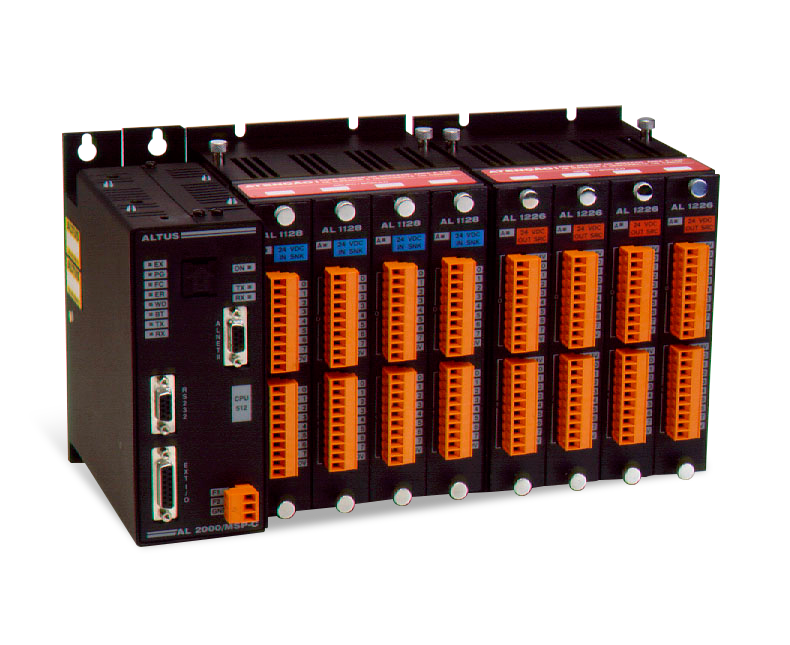
The technical maturity of this generation arrived with the AL-2017, a controller focused on high availability and redundancy. The AL-2017 was capable of synchronizing up to 48Kb of operand memory and featured an automatic switchover system. The AL Series also stood out for its wide range of input and output (I/O) modules and communication interfaces, which allowed integration with market protocols that were beginning to consolidate worldwide.
This generation solidified Altus’ presence in strategic sectors, such as the Campos Basin, where our national technology began to control systems in oil and gas exploration.
Greater versatility for the market with the Piccolo and Quark Series
Throughout the 1990s, Altus identified the need to develop controllers that combined the technological sophistication of the AL-2000 Series with more compact and cost-effective formats suitable for smaller-scale applications. It was in this context that the Piccolo and Quark series emerged.
The Piccolo Series was conceived as a highly adaptable solution for smaller processes that still demanded control capacity and embedded intelligence.
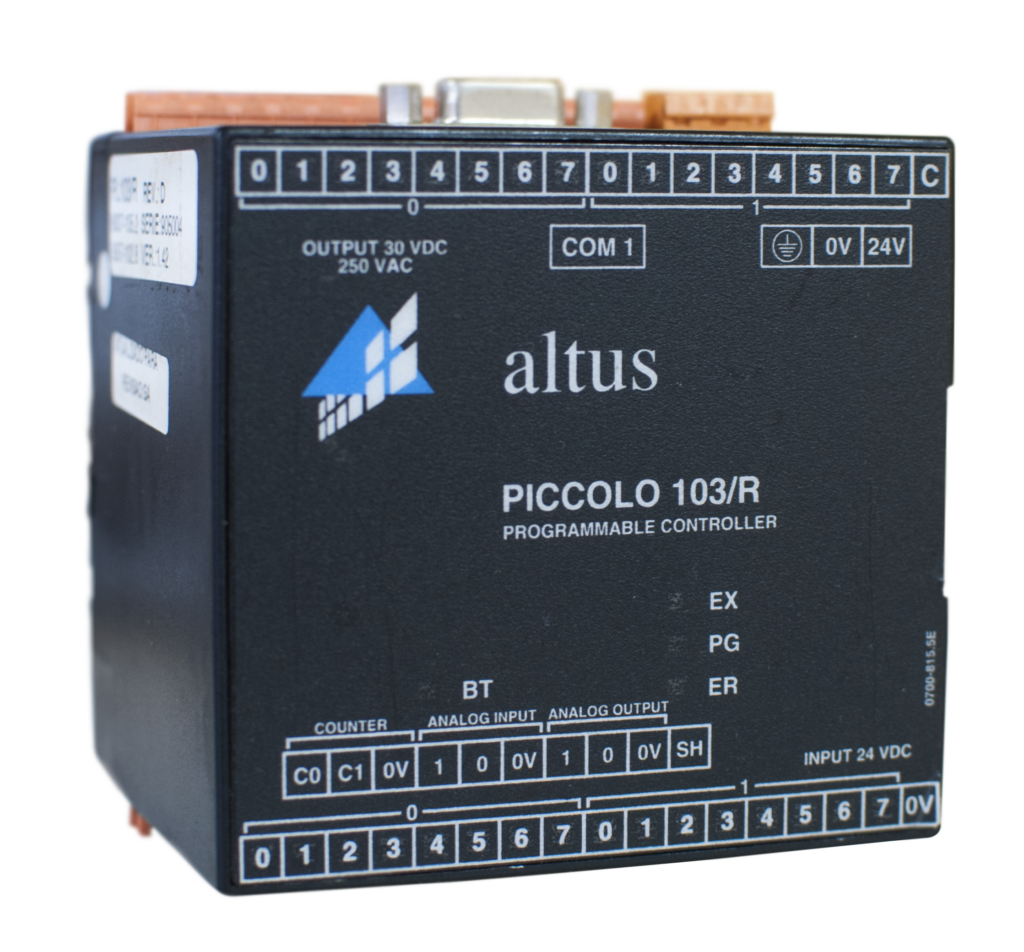
Meanwhile, the Quark Series focused primarily on space and cost optimization, maintaining the reliability standards that characterize Altus products.
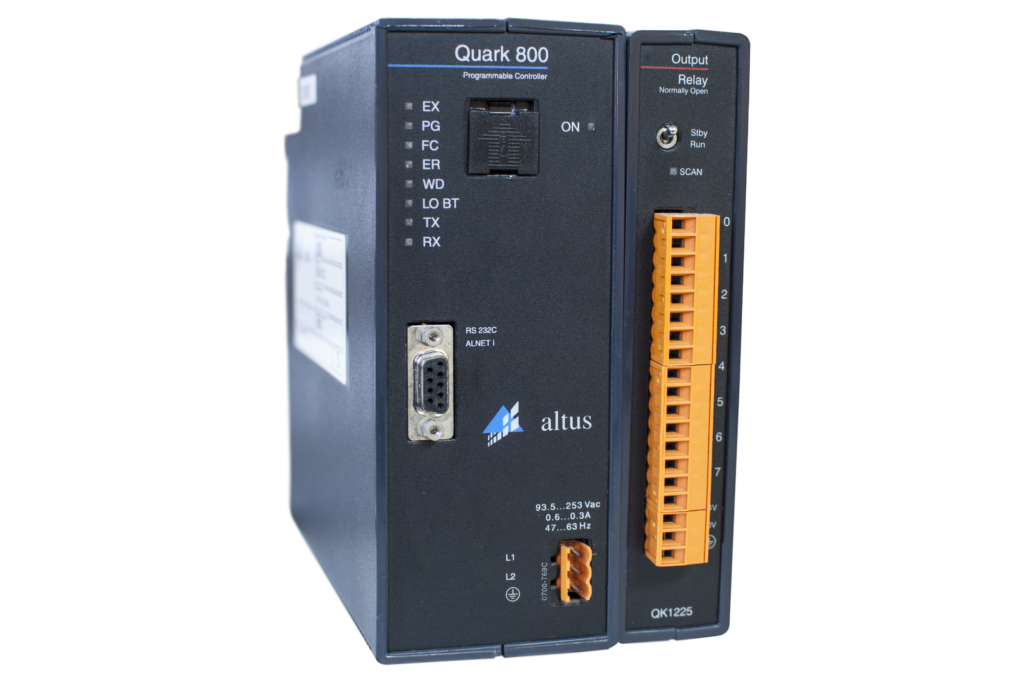
These two controller families highlighted the company’s ability to scale its technology across different market niches, bringing more advanced automation solutions to a wide variety of applications, a characteristic that would consolidate as an Altus trademark in subsequent generations.
Even though they are considered legacy technologies today, Altus maintains its commitment to technical support and spare parts supply, ensuring that equipment installed over 25 years ago continues to operate reliably in various types of industrial plants.
Ponto Series and distributed intelligence via web
The early 2000s marked a new technological leap for Altus with the launch of the Ponto Series. This family of controllers and universal I/O modules was developed to meet the growing demand for industrial control decentralization, following the evolution of automation architectures.
The Ponto Series represented a break from proprietary and closed models by adopting open communication standards, such as PROFIBUS, expanding the possibilities for integration between devices and systems, allowing greater flexibility in building industrial networks and consolidating the foundation for more distributed and interoperable architectures.
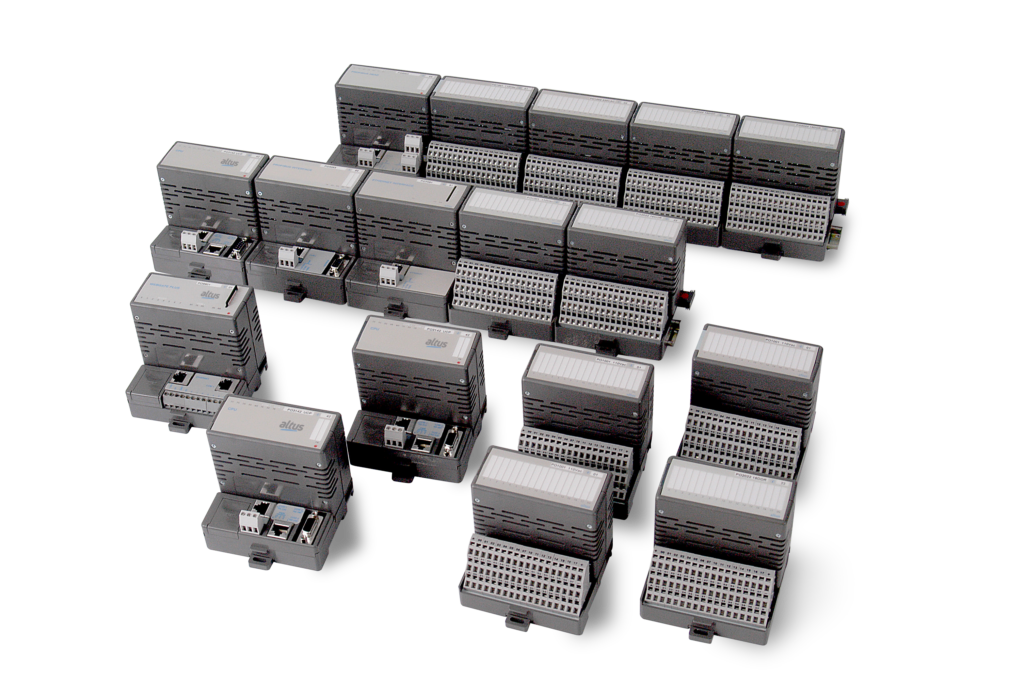
In 2001, Altus introduced WEB technology for its PLCs, initially integrated into the Ponto Series. For the first time, access to diagnostics, supervision, and commands of an industrial process could be done through a standard browser, using the Ethernet network infrastructure. The PO3247 model, in particular, offered 1 MB of Flash memory, native redundancy, and HART protocol support, enabling remote asset management and instrument configuration directly through the PLC.
This technology was fundamental for the automation of the Garoupa platform, in Brazil’s Campos Basin, one of the largest and most complex operations at the time.
The convergence between control and interface with the Duo Series
For the OEM machinery market and systems requiring direct and constant interaction with the operator, Altus launched the Duo Series.
This series represented the fusion of a high-performance PLC for its time (32-bit processor) with a graphical HMI in a single device.
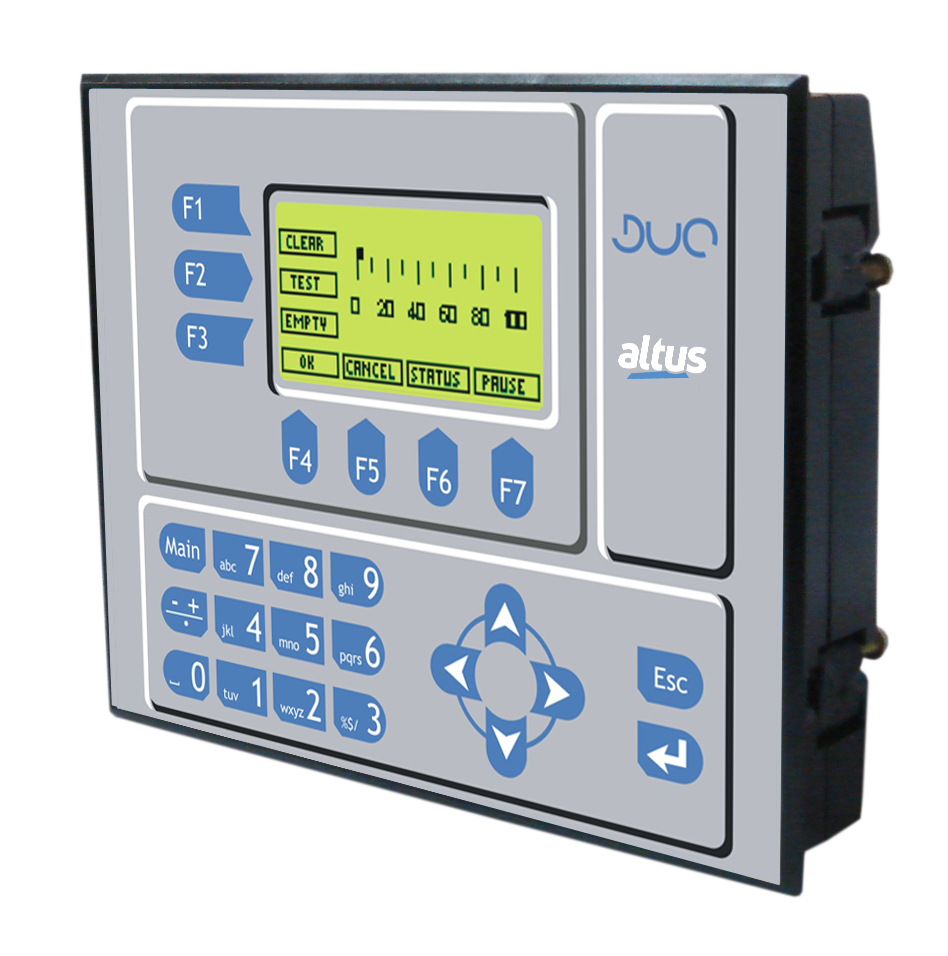
The differentiator of the Duo Series lay in its programming environment, as it was the first Altus PLC to use MasterTool IEC for the integrated development of control logic and operation interface design, enabling both stages to be carried out simultaneously.
In addition to reducing physical space and simplifying wiring, the Duo Series also stood out for the possibility of customizing the external layout (overlay), allowing machine manufacturers to incorporate their own visual identity into the equipment.
The Nexto System and intelligent automation for high performance
ambitious project that would give rise to what is now the Nexto System: a controller designed to compete at the highest level of industrial automation.
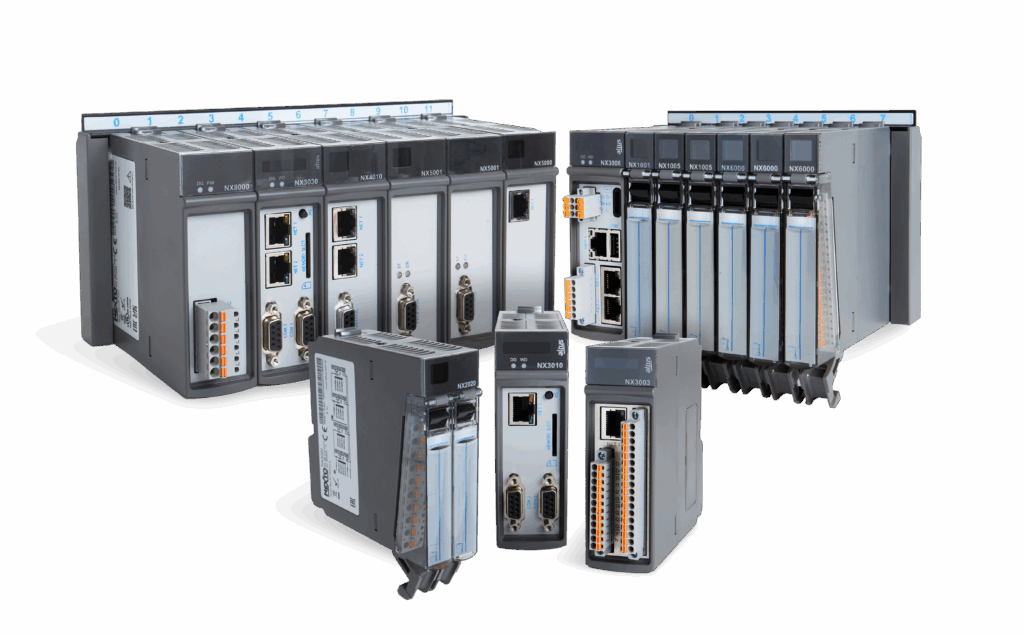
Conceived to handle complex and large-scale applications, the first Nexto brought advanced levels of processing, connectivity, and scalability to the national industry.
Based on 64-bit RISC processors from the PowerPC architecture, renowned for their balance between low power consumption and high performance, the first PLC in the Nexto Series was capable of executing 1,000 instructions in just 16 microseconds, setting a new benchmark in responsiveness for critical applications.
Its bus architecture, based on deterministic Ethernet, allowed the CPU to control up to 320 I/O points in a local rack and connect to up to 24 remote racks, maintaining high levels of performance and communication stability.
With the capacity to address up to 40,000 control points, the Nexto NX Series established itself as a robust and scalable platform for large-scale automation systems. Thus, the NX Series was the technology chosen for the automation of Brazil’s Pre-salt exploration platforms.
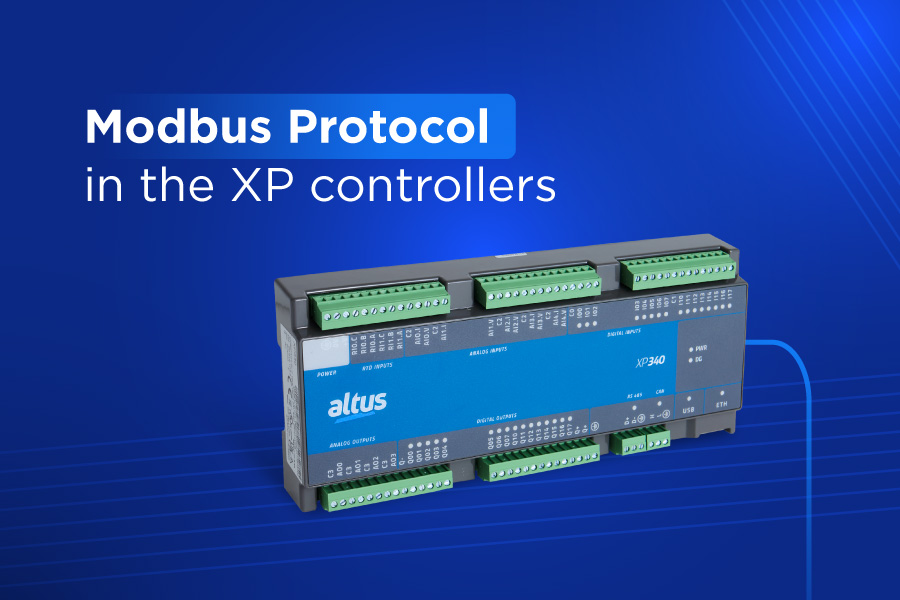
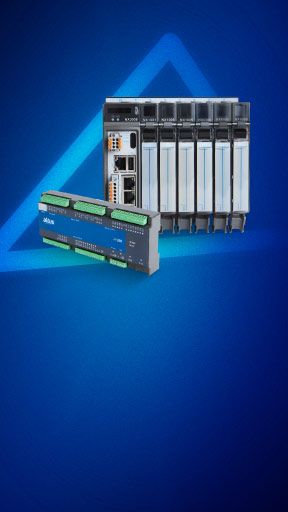
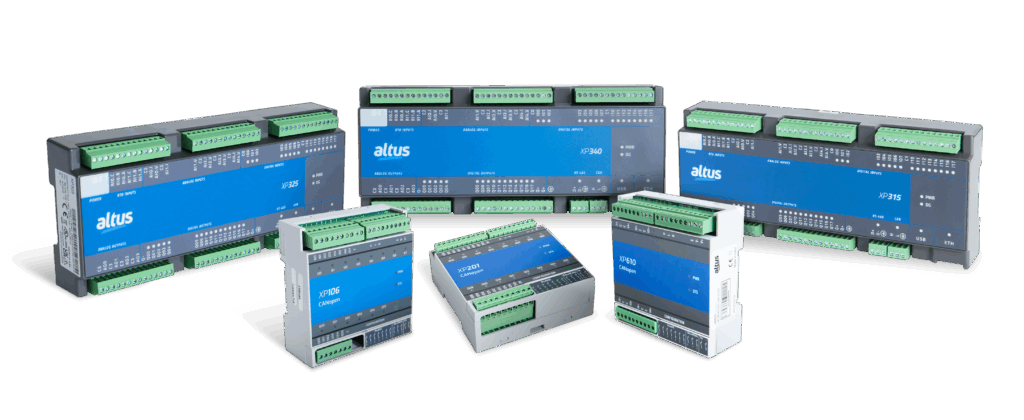
In 2017, Altus began developing a new series to address the emerging challenges of Industry 4.0: the Nexto XP Series.
The goal was to create a compact, low-cost controller equipped with all the intelligence and connectivity required by the Industrial Internet of Things (IIoT), bringing features previously exclusive to large systems to small and medium-sized processes. Equipped with 32-bit ARM processors, these controllers are built into a compact body with high-precision digital and analog inputs and outputs.
The XP family was the first to be natively cloud-ready. Supporting protocols such as MQTT and OPC UA, the controllers enable direct communication with Big Data platforms and cloud computing services without the need for intermediate gateways. Cybersecurity features, such as integrated Firewall and VPN, protect data against external threats, a growing concern in the era of hyper-connectivity.
The XP Series also expanded Altus’ reach into new markets, such as building automation, water and wastewater, and packaging machinery.
The arrival of the Nexto XF Series
launch of the Nexto XF Series. Representing Altus’ 5th generation of controllers, the XF Series is the result of decades of accumulated knowledge, now integrated with the most modern technologies in industrial automation and computing.
The Nexto XF was conceived as a distributed intelligence platform, ready to operate in Edge Computing architectures. While traditional controllers focus essentially on the direct control of hardware and processes, the XF Series expands this concept by bringing advanced virtualization and data processing capabilities to the factory floor.
With support for Docker technology, Altus has dedicated exclusive RAM for the use of Docker containers, ensuring that data analysis applications, local databases, or Python scripts run in parallel with deterministic control without compromising industrial process stability.
| Feature | Nexto XF |
| Processor | 64-bit Dual-Core ARM (1 GHz). |
| Virtualization | Native Docker support with dedicated memory. |
| Protocols | PROFINET, EtherNet/IP, EtherCAT, OPC UA, MQTT, CANopen, J1939. |
| Protection | Conformal Coating on all boards. |
Programmer | Mastertool X (Free software). |
This approach allows for leaner and more secure architectures. Instead of sending all raw data to the cloud, the Nexto XF can process information locally, identify trends and anomalies, and send only the results via MQTT, reducing data traffic costs and increasing security.
The launch of Nexto XF controllers is accompanied by the new version of the MasterTool software, now in version X. With this version, it is possible to perform everything from hardware configuration and control application programming to the creation of modern WebVisu supervision interfaces, which are fully responsive and accessible from different devices.
This integration within a single engineering environment simplifies project development, increases team productivity, and enables the creation of more connected and scalable applications aligned with the demands of Industry 4.0.
Four decades connecting people and technology
The journey that began in 1982, with the dream of developing a national controller, has evolved over the decades to reach the state of the art in industrial automation. Along this path, Altus has followed a track marked by continuous innovation: from the AL Series, where every byte of memory represented a technological breakthrough, through the flexibility of the Ponto Series, reaching the power and scalability of the NX and XP Series, and finally arriving at the distributed intelligence of the Nexto XF Series.
Today, Altus technologies play a strategic role in critical infrastructure, accounting for the automation of approximately 35% of Brazil’s oil production and 20% of its electricity generation, in addition to being present in more than 40 countries. These figures demonstrate that Brazilian engineering possesses the capacity, innovation, and competitiveness to operate on the global stage.
With the official launch of the Nexto XF controllers, Altus presents more than just a new product to the market, delivering a technological platform prepared for the industry’s next challenges and reinforcing the vision that the future of automation will be increasingly cloud-connected and, above all, driven by smarter operations.