





It is three in the morning. In a large-scale plant, a pressure transmitter responsible for the safety monitoring of a synthesis reactor begins to oscillate almost imperceptibly. The variation is slow and silent, caused by the progressive clogging of its impulse line. Without continuous monitoring of the device’s internal diagnostic variables, the distributed control system only registers the failure when the process variable crosses the critical limit. The automatic shutdown is immediate. Production comes to a complete halt.
When the maintenance team is called, a race against time begins. Where is the device’s updated manual? What is the version of the configuration file needed to re-establish communication with the coupled control valve? Every minute without an answer increases the losses, which can exceed hundreds of thousands per hour of downtime.
This scenario is more common than it should be. It shows how the lack of structured asset management generates severe, invisible impacts on productivity, which only become visible once the financial and operational losses are already consolidated.
To help you anticipate this problem, we have prepared this content: the 5 main signs that an industrial plant needs an asset manager and what changes once this tool goes into operation.
What are the main problems caused by inadequate asset management?
The lack of real-time visibility into the health and operational status of industrial assets generates a chain of risks that directly impact companies’ profitability and compliance, such as:
- – High cost to resume operations: when a machine fails unexpectedly, returning to production is not immediate. Restarting involves stages such as warming up machinery for stability, a process that can take 15 to 45 minutes, or the formal requalification of the process in regulated industries. Products generated during these time windows are usually discarded, resulting in wasted raw materials.
- – Drop in quality: the stoppage of one piece of equipment destabilizes the entire flow of the subsequent stages. To compensate for this delay, operators frequently force the pace of production after restarting, increasing the likelihood of failures and decreasing the precision of inspections. Data indicates that defect rates increase by 15% to 30% in the four hours following an unplanned restart, contaminating entire manufacturing batches.
- – Cascading emergency costs: lost production compromises compliance with contractual schedules, especially in sectors with integrated supply chains. To avoid penalties, industries resort to emergency express air transport, the cost of which can be 5 to 10 times higher than planned freight. The urgent acquisition of spare parts not held in stock also adds more urgency fees and extra freight that strain the budget.
- – Labor time inefficiency: without reliable data to guide inspections, the technical team operates solely in a “firefighting” mode. This scenario reduces active working time (wrench time) to rates between 25% and 35% and drives up overtime expenses.
It is also worth highlighting another piece of data: approximately 83% of asset failure patterns are random and have no relationship with cumulative operating time. This means that maintenance methods based on fixed dates fail to prevent a large portion of industrial breakdowns, reinforcing the need for data-driven management and continuous monitoring. Asset management enables data collection, contextualization, and analysis, transforming physical variables into well-founded decisions.
However, assessing the maturity of an industrial plant requires comparing internal indicators with industry benchmark metrics, as you can see below:
| Performance metric | Market average | Ideal average | Operational benefit |
| Preventive Maintenance Compliance (PMC) rate | 60% – 75% | > 90% | Ensures the execution of scheduled preventive activities. |
| Planned Maintenance Percentage (PMP) | 55% – 65% | > 85% | Minimizes the need for high-cost emergency interventions. |
| Overall Equipment Effectiveness (OEE) | < 75% | Between 85% and 99% | Directly measures process productivity, quality, and availability. |
| Productive time | 25% – 35% | Between 50% and 55% | Reduces time spent on travel and searching for documentation. |
| Maintenance cost | 3% – 5% | Between 1% and 3% | Optimizes operational expenses in relation to the asset’s replacement value. |
The signs that a plant needs an asset manager
Identifying operational and structural anomalies before they become failures is an essential competitive advantage. Below are the five main signs indicating an urgent need to implement an asset management system:
1st sign: Recurrent failures in field devices and instruments
When pressure transmitters, flow meters, or valve positioners present repetitive failures, the standard maintenance response is usually limited to replacing the component or simply restarting the device.
However, this approach only treats the symptom, not the cause.
The problem is structural: without a system that extracts the device’s internal data, such as physical wear, circuit temperature, coil integrity, and impedance variations, the root causes of the failures remain hidden. The result is a cycle of recurring breakdowns that consumes parts, labor, and time without ever actually resolving the situation.
2nd sign: The barrier between theoretical prevention and reactive reality
There is a well-documented phenomenon in the industry known as the “execution gap”: although approximately 88% of industries claim to adopt preventive maintenance strategies, an analysis of work orders reveals that only 51% of the executed tasks are actually preventive.
Similarly, 58% of plants claim to have predictive tools, but only 27% apply them systematically in their operational routine.
The root of this discrepancy lies in the decentralization of equipment information. Without a centralized tool capable of unifying histories and speeding up access to the configuration parameters of each instrument, preventive and predictive activities consume excessive preparation time and end up being postponed in favor of emergency corrective demands that cannot wait.
3rd sign: Rising maintenance costs without gains in reliability
When the maintenance budget grows year after year without a corresponding evolution in availability and OEE rates, the diagnosis is clear: there is a serious imbalance in the efficiency of the interventions.
The cause is well-defined: the inability to prioritize actions based on criticality and the actual wear of the assets. Without integrated predictive diagnostics, the team relies on calendar-based preventive maintenance, replacing parts that are still useful or performing excessive interventions on stable equipment.
This excess of interventions introduces an additional, underestimated risk: failures caused by human error during unnecessary replacements. The result is a rising cost without the plant achieving the stability that would justify such investment.
4th sign: Lack of visibility and diagnostics dependent on field visits
When the maintenance routine requires constantly sending technicians to process areas to check local instrument parameters, perform simple calibrations, or read error codes on displays, this is a clear sign of a structural limitation in visibility.
In addition to operational inefficiency, this model exposes workers to unnecessary risks. The technical team’s actual productive time is consumed by travel, searching for parameterization tools, and verifications that could be performed remotely, leaving little room for interventions that actually add value to plant reliability.
5th sign: Inefficient shutdown planning and increased repair times
An indicator that deserves immediate attention: the average industrial MTTR has jumped from 49 to 81 minutes, an increase driven by training gaps and logistical delays. This growth is directly related to the difficulty of planning interventions in advance during scheduled plant shutdowns.
When the maintenance team starts a technical shutdown without knowing the calibration parameters, pending firmware revisions, or the bill of materials of the devices to be serviced beforehand, a large portion of the available time is wasted just identifying the problems.
The result is a longer downtime than necessary, and a return to production capacity that is slower and riskier than it should be.
How asset management software acts in preventing failures
To combat the unpredictability of random failures, modern industries must go beyond maintenance calendar-based strategies. Asset management software allows for the implementation of a predictive approach driven by the actual condition of the machinery, using continuous data to detect failures before they happen and to intervene long before any production interruption.
The operational availability of a system can be defined by the relationship between the Mean Time Between Failures (MTBF) and the Mean Time to Repair (MTTR):
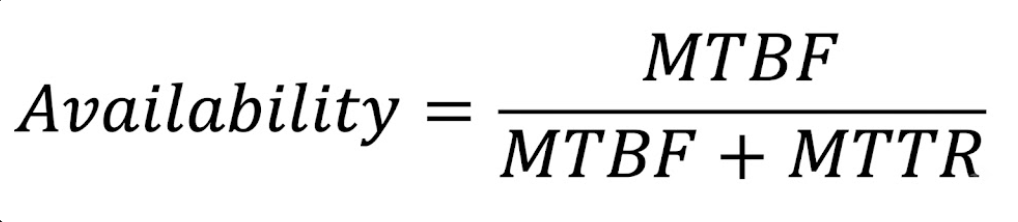
To elevate availability and OEE to industry benchmark standards (established above 85%), companies must act on two fronts: extending the MTBF through preventive diagnostics and reducing the MTTR through fast and accurate remote diagnostics.
Read more: 4 tips for measuring OEE correctly in your industry
Smart instrumentation, operating under digital protocols such as HART and PROFIBUS, already generates a massive volume of diagnostic data. The problem is that this data usually remains underutilized due to the lack of an adequate integration infrastructure. It is precisely this gap that the asset manager fills.
By functioning as an integrating platform for field data, the asset manager establishes a direct, bidirectional communication channel with the plant’s smart instruments. Problem detection is anticipated through the continuous analysis of advanced diagnostic variables made available via digital protocols. A smart valve positioner, for example, can report excessive friction buildup on the stem or seat wear before a jam occurs.
This centralization reduces the MTTR, ensuring that the technician goes to the field already equipped with the correct spare part and the necessary tools. Decision-making then becomes based on precise data, enabling the anticipation of interventions in a safe manner that is oriented toward the cost-benefit of each individual asset.
ArchiteX: Altus’ Asset Management Solution
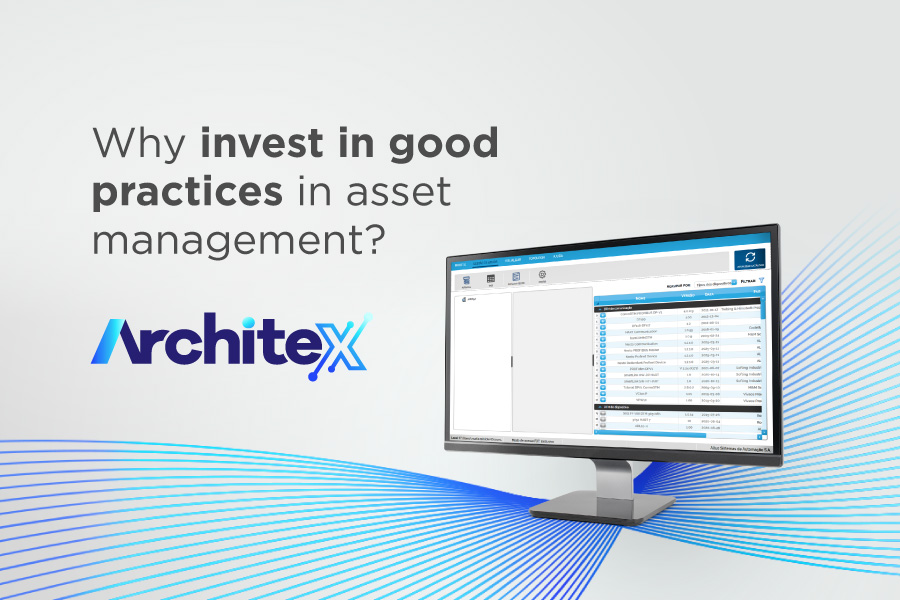
To meet the reliability and traceability demands of Industry 4.0, Altus has developed ArchiteX (AX8500), an advanced software tool designed specifically for the efficient management of industrial assets.
Operating as an FDT Frame Application in compliance with standardized FDT/DTM technology, ArchiteX centralizes the configuration, parameterization, maintenance, and diagnostics of smart instrumentation devices from different manufacturers into a single platform. This eliminates isolated proprietary interfaces for each type of equipment.
With ArchiteX, users can build a detailed network topology that mirrors the physical devices connected to the production process. This topology can be created manually or generated quickly using the automatic scan feature, which dynamically detects all channels of a module or communication gateway and identifies compatible DTMs.
The ArchiteX network topology displays the connection status of each DTM in real time using intuitive icons:
– Disconnected: The DTM has no established connection with the physical field device.
– Communication configured: The DTM has completed the network parameterization stages and is waiting to connect to the physical device.
– Connected: The online communication link is active and successfully established.
– Busy: The DTM is executing critical, non-interruptible tasks, such as upload, download, or scanning routines.
In addition to status monitoring, ArchiteX supports custom manufacturer functions contained within the installed DTMs, including echo curve generation for radar level transmitters, remote device resets, and real-time visualization of historical process trends.
The platform also allows engineering projects to be saved and shared directly on centralized servers, enabling collaborative access to asset parameters from multiple engineering terminals distributed across the plant. It is compatible with Altus’ leading controllers and smart modules, including the Nexto System series, as well as field instruments from various global manufacturers.
ArchiteX Licensing Models
To ensure deployment flexibility for industries of all sizes, ArchiteX is available in two licensing options:
| Feature / Functionality | Lite Version | Pro Version |
| Add and remove DTMs from the topology | Yes | Yes |
| Asset identifier editing (Tag) | Yes | Yes |
| Automatic channel scanning (Scan Topology) | No | Yes |
| FDT XML project import | Yes | Yes |
| FDT XML project export | No | Yes |
| Connect / Disconnect with online instruments | Yes | Yes |
| Upload and Download of configuration parameters | Yes | Yes |
| Execution of native and advanced DTM functions | Yes | Yes |
| Opening of error message log window | No | Yes |
Industrial maintenance that still operates by responding to crises instead of anticipating them leaves money on the table every day. In the era of smart manufacturing, transforming this logic into a strategic approach is a competitive requirement.
Ignoring the early signs of inefficiency in field asset management comes with a price: losses that silently and progressively damage operational margins. An efficient asset manager reverses this dynamic by transforming latent instrumentation data into precise maintenance decisions, reducing MTTR and extending the useful lifecycle of equipment.
By adopting centralized engineering tools based on open standards, managers ensure that their plants operate in regulatory compliance, with operational safety and maximum productivity, building the foundation for continuous evolution toward the digital industry.