




The New Legal Framework for Water and Wastewater in Brazil, enacted in 2020, established universal service targets for water and sewage by 2033, demanding continuous investments in infrastructure, technological modernization, and process optimization. Sector utilities, however, still face complex structural bottlenecks that impact the achievement of these goals.
Among the most critical challenges is the high rate of water loss in distribution networks. Recent surveys by Instituto Trata Brasil, based on data from the National Information System on Water and Wastewater (SINISA), indicate that the country still wastes between 39.5% and 40.3% of treated water before it reaches end consumers. This volume lost to leaks, inadequate network pressure, fraud, and under-metering represents a significant socio-environmental impact, as well as a severe loss of revenue for operators.
Electricity costs, in turn, represent the second-largest expense for water and wastewater companies. Pumping systems and lift stations are estimated to consume between 80% and 90% of all electrical power required in the water and wastewater cycle.
With a history of over four decades of technological innovation, more than 30 years of which have been dedicated to the water and wastewater segment, Altus specializes in providing automation and control solutions for this market. Learn more about this journey in the following paragraphs.
From conventional automation to Edge Computing
From the development of our first generations of PLCs, dedicated to controlling industrial machines and processes, to today’s highly complex modular architectures, we built a system tailored to the operational nuances and climatic conditions of Brazil’s diverse biomes.
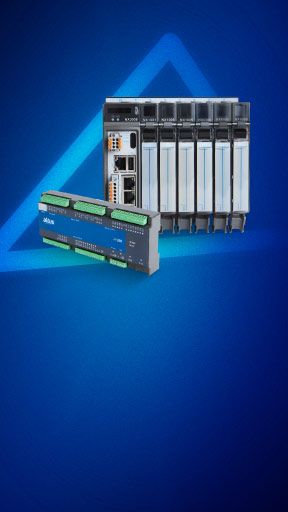
The introduction of controllers such as the AL Series marked the initial transition toward centralized monitoring systems. This technological advancement culminated in the development of the Nexto System, a modular automation ecosystem engineered to combine high processing speed, expanded connectivity, and robustness.
The continuous evolution of the Nexto family enabled the structuring of custom-tailored solutions for different application scales in Water and Wastewater:
| Series | Architecture and features | Interfaces and protocols | Application in Water and Wastewater |
| Nexto XP | Controller with integrated I/O, high-speed CPU, embedded WebServer, and LED diagnostics. | Ethernet, RS-485, CAN, USB; MQTT, OPC UA, PROFINET, Modbus RTU/TCP. | Artesian wells, small and medium-sized lift stations, reservoirs, and remote telemetry points. |
| Nexto XF | 1 GHz dual-core 64-bit ARM processor, distributed intelligence, embedded Linux with Docker and WebServer. | Dual Ethernet, RS-485, CAN, USB; OPC UA, MQTT, Modbus, PROFINET, EtherNet/IP, EtherCAT, OpenVPN. | Raw water intake, deep wells, remote quality analysis, and small to medium-sized process control. |
| Nexto NX series | 1 GHz 64-bit ARM processor, embedded Linux support and Docker virtualization, high memory capacity. | PROFINET (with MRP), EtherNet/IP, OPC UA, EtherCAT, IEC 60870-5-104, MQTT, CANopen. | Large Water Treatment Plants (WTP) and Wastewater Treatment Plants (WWTP), CCO integration nodes, and Edge Computing applications. |
| SCADA BluePlant | Real-time supervision, dynamic screens, operational reports, data historization, and web dashboards. | Direct connectivity with relational databases and integration with cloud platforms. | Regional Operation Control Centers (CCO) and command rooms in production plants. |
Read the full history of our PLCs: 4 decades of innovation: discover Altus’ pioneering role in the Brazilian industry
Connectivity, telemetry, and centralization
Water and Wastewater networks are characterized by vast territorial extensions and geographically dispersed assets. In a single application, hundreds of infrastructure points span urban and rural areas, ranging from raw water intakes and treatment complexes to intermediate lift stations, reservoirs, and tubewell systems. Altus automation solutions can operate across each of these layers. Here are the details:
Water Treatment Plants (WTP) and Wastewater Treatment Plants (WWTP)
In treatment plants, the main challenge is ensuring the stability of physical-chemical and biological processes despite variations in raw effluent quality and fluctuations in consumer demand. Nexto System controllers perform deterministic control of complex loops, regulating parameters such as pH, turbidity, flow rate, and dissolved oxygen.
Precise automation across coagulation, flocculation, settling, filtration, and disinfection stages reduces chemical reagent waste and prevents operational failures. In sewage treatment, dynamic control applied to air blowers during aeration stages substantially cuts electricity consumption, which represents the largest portion of operational expenses in a WWTP.
Our portfolio includes several successful partnerships in Brazil, such as CAESB (Environmental Sanitation Company of the Federal District), SANASA (Water Supply and Sanitation Company of Campinas), DMAE (Municipal Water and Sewage Department of Porto Alegre), CESAN (Espírito Santo Sanitation Company), COPASA (Sanitation Company of Minas Gerais), CAGECE (Water and Sewerage Company of Ceará), and DAE (Water and Sewage Department of Santana do Livramento).
Also part of this track record is the Ramal do Agreste project, a water system that transports water from the East Axis of the São Francisco River Transposition to the Pernambuco countryside.
Altus’s expertise in this segment is also reflected in projects delivered in 2026, notably WWTP São João, WWTP Vicente de Carvalho, and WWTP Bertioga. These projects feature redundant PLCs, ensuring higher availability and operational continuity for automation systems. The use of redundant architectures reinforces the reliability, efficiency, and availability of Altus solutions, contributing to reduced downtime and continuous operation of critical wastewater treatment processes.
We are present in Sabesp’s three largest Water Treatment Plants (WTPs) in terms of maximum operational/permitted flow rate, which highlights our extensive experience in large-scale water supply systems.
Key highlights include WTP Guaraú (Cantareira System) with a maximum flow rate of 33,000 L/s (33 m³/s); WTP Taiaçupeba (Alto Tietê System) with a maximum flow rate of 15,000 L/s (15 m³/s); and WTP ABV – Alto da Boa Vista (Guarapiranga System) with a maximum flow rate of 14,000 L/s (14 m³/s).
The presence of Altus solutions across these three vital facilities demonstrates the company’s ability to serve high-capacity, mission-critical operational systems, providing technologies for processes essential to the water supply of the São Paulo Metropolitan Region.
Network telemetry, wells, and lift stations
Combating resource loss requires continuous monitoring of pressure and flow rates across the entire distribution network. Remote points, such as water and sewage lift stations, artesian wells, and reservoirs, are frequently located in isolated areas without dedicated communication infrastructure.
For these applications, Nexto XP controllers offer high connectivity. Equipped with embedded communication ports and 4G modem support via USB interface, these PLCs transmit operational data to cloud SQL databases or central systems using lightweight protocols such as MQTT and OPC UA.
Dashboards accessible via the integrated WebServer allow operators to monitor critical pump variables and reservoir levels directly on mobile devices without requiring dedicated on-site supervisory software. This efficient remote management minimizes the need for routine physical inspections, reduces maintenance logistics costs, and accelerates field team response times in containing leaks.
Operational Control Centers (CCO) and integrated management
Centralizing data collected in the field enables the structuring of modern Operational Control Centers (CCOs). Functioning as intelligent dataloggers, Altus controllers process raw data and make it available to corporate SCADA systems.
A prime example of this strategic centralization was the Sabesp Santos CCO retrofit project. Upgrading the control systems to the Nexto System provided the utility with full visibility over the water supply and wastewater logistics in the Baixada Santista region. Access to real-time processed information enabled more precise network operations, pressure regulation, and faster decision-making during demand fluctuations.
Impact and operational efficiency in Water and Wastewater operations
The solutions developed by Altus directly address the main operational demands of the Water and Wastewater sector, turning technical controller features into practical management benefits for utilities:
| Sector challenge | Cause of inefficiency | Altus’ solution | Impact and gains |
| High rate of water loss | Pressure transients in the network and delays in leak localization. | Telemetry with Nexto XP, dynamic PRV control, and real-time pressure reading. | Reduction in average distribution pressure, mitigation of network bursts, and effective leak control. |
| Electricity costs | Continuous motor operation without speed regulation and pumps operating off their best efficiency point. | PID loops integrated with inverters, pumping scheduling, and tariff management. | Shutting down lift stations during peak electricity hours and matching power output to real-time water demand. |
| Service interruptions in harsh environments | Electronic component oxidation due to humidity; outages caused by single controller failure. | Conformal Coating on boards, redundant CPUs in hot-standby, and hot-swapping. | Guaranteed operational continuity, high plant availability, and protection of automation assets. |
| Field and predictive maintenance costs | Need for daily visits to remote locations to check parameters. | Dashboards via embedded WebServer, edge computing with Docker, and 4G telemetry. | Remote status monitoring, reduced team dispatching, and faster operational diagnostics. |
| Vulnerability to cybersecurity incidents | Connection of remote control stations to open communication networks without encryption. | Integrated PLC firewall, communication via OpenVPN, and support for encrypted OPC UA. | Protection of critical infrastructure against unauthorized access and compliance with data security guidelines. |
Altus as a strategic partner in the Water and Wastewater sector
Altus’s track record in the Water and Wastewater market demonstrates how developing technologies aligned with field demands can transform the management and productivity of essential services.
The journey taken, from the earliest controllers to modern platforms equipped with edge intelligence, high-availability redundancy, and cloud connectivity, parallels the evolution of the Water and Wastewater sector in Brazil itself.
A prime example of this close relationship with the market is product development driven by direct collaboration with sector clients. Sabesp contributed suggestions during the development of the NX3008 CPU, helping align its features and capabilities with specific demands identified in Water and Wastewater applications. Similarly, SANASA collaborated on the development of the NX6014 analog input module.
This interaction between manufacturer and end users turns real operational challenges into core product requirements, directly connecting technological innovation to the daily demands of treatment plants and supply networks.
By combining physical robustness, cybersecurity, and operational simplicity, Altus solutions empower both public and private utilities with the tools required to reduce water losses, optimize energy consumption, and modernize distribution networks. As the industry works toward universal access to treated water, Altus’s deep expertise and continuous innovation position the company as a strategic partner in building more efficient, sustainable, and future-ready water infrastructure.