







The expansion of connectivity, driven by digital transformations taking place across industry, has brought an unprecedented widening of the attack surface exposed to cyber threats.
Historically, Operational Technology (OT) networks operated under the premise of physical isolation. This separation, however, has been diminishing in modern industry as the need for continuous data exchange between the shop floor and Information Technology (IT) has grown. Industrial environments that were previously inaccessible now share protocols over IP networks, becoming susceptible to cyber invasions capable of halting production lines, compromising equipment integrity, causing environmental disasters, and threatening worker safety.
Given this scenario, the first step toward building a solid defensive strategy is performing a thorough inventory and structured risk analysis of an industrial plant’s cyber threats. Learn more about this process in this article.
The current landscape of industrial cybersecurity
While IT networks prioritize data confidentiality and corporate information protection, OT is driven by determinism, operational continuity, and the safety of personnel and assets. In automation networks, a data traffic interruption, even one lasting mere milliseconds, can cause a conveyor belt to stall, an unscheduled boiler shutdown, or the loss of entire production batches.
Integrating these networks without proper planning exposes shop-floor vulnerabilities. A large portion of operating automation assets was engineered when cyber threats were not part of engineering specifications, resulting in the legacy use of protocols lacking encryption or native authentication mechanisms. Added to this is the use of engineering workstations simultaneously connected to administrative networks and fieldbuses, creating direct bridges for undetected cyber intruders to move laterally.
For this reason, industrial cybersecurity is no longer the exclusive responsibility of the IT department and has come to be recognized as a core component of automation engineering when developing new applications.
Why risk analysis is the starting point
An effective defensive plan cannot be built without a deep understanding of the environment to be protected.
Applying traditional IT tools to automation networks indiscriminately, without a prior risk assessment, can generate false positives, block essential deterministic operational commands, or even bring down high-speed field networks. This is why well-designed cyber risk management guides both engineering decisions and financial investments to the right places.
In this process, the primary international benchmark is the ISA/IEC 62443 standard, particularly section 3-2 (Security Risk Assessment for System Design). This methodology establishes a systematic workflow to identify, evaluate, and mitigate vulnerabilities in industrial automation and control systems. See details below:
| Risk management steps (IEC 62443-3-2) | Operational description | Engineering deliverables |
| System under consideration | Delimitation of the physical, logical, and functional scope of the analyzed automation system. | Updated asset inventory, network architecture diagrams, and data flows. |
| High level risk assessment | Analysis of worst-case failure scenarios without applying additional countermeasures. | Financial, operational, environmental, and human safety impact matrix. |
| Zone and Conduit models | Logical and physical partitioning of the plant into zones with similar security requirements and controlled conduits. | Segmented network architecture and restrictive traffic rules between zones. |
| Target security levels | Definition of the Target Security Level (SL 1 to SL 4) for each zone and conduit based on risk. | Asset-linked technical protection requirements. |
| Detailed assessment | Identification of specific threats, component vulnerabilities, and development of the mitigation plan. | Asset-linked technical protection requirements. |
Adopting the Zone and Conduit model prevents the compromise of a peripheral device, such as a field HMI or a wireless sensor, from granting an attacker unrestricted access to the plant’s central controllers or Safety Instrumented Systems (SIS). It is a matter of restricting by design the blast radius of any incident or cyberattack and defining the criticality of each zone.
Small applications need protection too
There is a misconception that cyberattacks affect only large industrial complexes or critical infrastructure. However, survey data reveals that small and medium-sized plants, as well as standalone machines, are also frequent targets.
Attackers routinely use automated scanning tools to sweep entire ranges of IP addresses searching for open ports and vulnerable protocols, such as unauthenticated protocols, insecure HTTP connections, or exposed FTP servers. In these scenarios, company size is irrelevant; what triggers an attack is the existence of unpatched vulnerabilities.
Consider practical examples of exposure that can occur in small and medium-sized applications:
- Remote pumping and sanitation stations: Geographically distributed units relying on cellular routers or radio links without proper encryption to communicate with the central SCADA. Hijacking these systems can disrupt water distribution, trigger effluent spills, or cause excessive chemical dosing in water treatment.
- Packaging and bottling lines: Machinery running outdated remote access software maintained by an external vendor. Compromising this interface allows attackers to halt a packaging line or tamper with operational dosing metrics.
- Industrial utilities: Chillers, compressors, and boilers managed by small controllers that frequently retain factory-default passwords. Unscheduled shutdowns of this equipment can cut off critical utility supplies across the entire facility.
- Supply chain attacks: Small system integrators with direct access to the operational network of large industrial facilities can serve as an indirect entry vector to reach the end customer’s core systems.
When lacking security can cost millions
In continuous process industries and critical infrastructure, automation system downtime immediately translates into losses. Global reports indicate that the average cost of a data breach in the industrial sector reached $4.88 million in 2024. Even so, in mission-critical operations, the indirect costs of process downtime often easily exceed the investments made in direct, proactive cyber incident containment. See details by sector:
Sector | Type of attack | Operational impact | Consequences |
| Offshore (FPSOs) | Alteration of process setpoints and interference with emergency shutdown systems. | Immediate shutdown of extraction operations, with estimated operational losses reaching millions of dollars per day. | Imminent risk to human life, fuel spills, and severe environmental fines. |
| Electrical Energy | Injection of malicious commands into protection relays and RTUs at high-voltage substations. | Regional blackouts, grid frequency instability, and forced load shedding. | Damage to high-voltage transformers and severe sanctions from regulatory bodies. |
| Metals and Mining | Disruption of SCADA systems managing conveyor belts and pelletizing yards. | Interruption of ore flow and halting of blast furnace charging operations. | Irreversible thermal shock damage to blast furnace refractories due to unplanned cooling. |
| Chemical and Pharmaceutical | Malicious modification of dosing parameters in batch processes. | Loss of pharmaceutical batches, reagent contamination, and shutdown of distillation columns. | Severe sanctions from health regulatory agencies and threats to consumer safety. |
| Food and Beverage | Manipulation of thermal control in pasteurizers, CIP systems, and cold storage units. | Raw material spoilage, production line stoppage, and loss of process traceability. | Massive product recalls and bacterial contamination across the production line. |
| Pulp and Paper | Unscheduled shutdown of continuous machines and chemical digesters. | High speed paper web breaks and clogging of pulp slurry pipelines. | High supplementary energy consumption for system rebalancing and accelerated actuator wear. |
Cybersecurity as an integral part of operations
Cybersecurity should not be treated as an isolated project with a fixed completion date.
The continuous emergence of new vulnerabilities through internet connectivity, software, and field devices demands an ongoing practice based on the Defense in Depth concept. After all, cybersecurity maturity is built through the integration of three key pillars:
People
Engineering, maintenance, and operations teams act as the first line of defense on the factory floor. Regular training must cover secure practices when handling removable media (such as calibration flash drives and maintenance laptops), creating strong credentials, and identifying social engineering tactics. Joint training between IT and OT teams also helps align corporate security objectives with real-time production constraints.
Processes
OT governance requires formal, documented procedures involving:
- Change and update management: Approved methodologies for applying security patches and firmware updates to PLCs without disrupting process cycle times.
- Access and privilege management: Implementation of the principle of least privilege (Role-Based Access Control), eliminating generic shared passwords among operators and technicians.
- Incident response plan: Clear protocols for the immediate isolation of compromised networks, manual control procedures, and tested routines for restoring controller program backups.
Technology
Opting for hardware and automation systems natively designed with cybersecurity features simplifies the implementation of countermeasures recommended by the IEC 62443 standard. Vulnerable devices require complex external mitigation solutions, whereas modern controllers come with built-in protection mechanisms and functions directly embedded.
Building safer solutions in industrial automation
Building an effective industrial cybersecurity strategy is not merely about purchasing standalone defensive software. It depends on a rigorous risk assessment, a detailed understanding of plant dependencies, and the application of established standards like ISA/IEC 62443.
In addition to strengthening processes and training teams, the choice of control technology plays a decisive role in shop-floor security. When PLCs feature native protection capabilities embedded directly into their architecture, implementing the countermeasures identified during the risk assessment becomes simpler and faster.
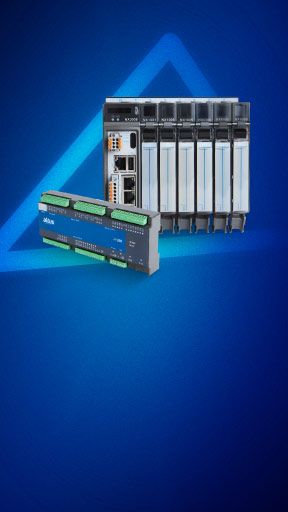
This is where modern control engineering stands out. Altus’s Nexto Series controllers incorporate robust cybersecurity features developed in direct alignment with ISA/IEC standard requirements. Featuring protection at both processing and operating system levels, Nexto controllers include an integrated firewall, support for VPN tunnels to ensure secure remote access, OPC UA servers with encryption and certificate-based authentication, and advanced Ethernet interface management.
Together, these features enable defense-in-depth architectures, isolating control zones and safeguarding deterministic traffic without adding infrastructure complexity. Consequently, legacy protocols such as Modbus TCP, IEC 60870-5-104, FTP, and others can be deployed securely, as their routing through VPN tunnels provides greater ruggedness in data transport.
Industrial plant security is achieved when continuous risk mapping, workforce empowerment, and control technologies work hand in hand. Proactively identifying vulnerabilities is the path to ensuring operational resilience, protecting facility integrity, and securing business continuity.