






We are living in a period of accelerated transformations where digitalization has ceased to be a competitive differentiator and has become the very foundation of industrial competitiveness. Industry 4.0 marked the connection between hardware and software, driven by system integration through the Internet of Things (IoT) and, more recently, by the growing incorporation of Artificial Intelligence (AI) within operations.
More than just faster machines, this new context involves systems capable of learning from data, interpreting scenarios, and acting with a degree of autonomy, an advancement that, until recently, seemed confined to the realm of science fiction.
Learn more about how Artificial Intelligence is redefining processes, expanding operational efficiency, and transforming the industry in this article.
The PLC’s Role as a Digitalization Accelerator
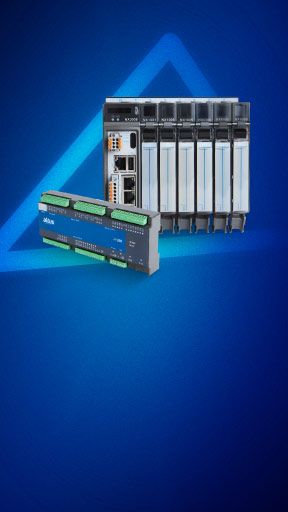
The digitalization of an industrial plant begins at the point of contact between the sensor and the controller. In this context, the PLC is the equipment responsible for capturing and processing information from this process.
In modern architectures, it ceases to act merely in the control of isolated devices, such as valves or motors, and begins to play the role of a contextualized data hub within the automation system.
For Artificial Intelligence solutions to be integrated into the operation and enable modernization strategies, it is essential to have high-quality real-time data and a reliable history. If the information captured by the PLC is imprecise or suffers from transmission delays, the AI’s capacity for analysis and decision-making is compromised, which can lead to significant financial losses.
Therefore, the importance of this capability in an industrial operation cannot be understated. In environments where thousands of variables are monitored simultaneously, sending all data to the cloud without any prior filtering or processing would overload bandwidth and significantly increase network latency.
In this scenario, PLCs take on the role of locally processing information, selecting and organizing only the relevant data. In this way, only the necessary data is sent to analysis systems or Artificial Intelligence models.
Learn about the protocols that unify an operation
In the past, the automation landscape was marked by the presence of proprietary protocols that created “islands of information,” hindering integration between different equipment and platforms. Today, for Artificial Intelligence to act effectively, it is essential that a common language exists between systems.
By adopting equipment based on open communication standards, it becomes possible to establish interoperability between the factory floor (OT) and corporate systems (IT). This approach facilitates data exchange between different layers of the operation, expands integration between technologies, and creates a solid foundation for the implementation of advanced analytics and Artificial Intelligence solutions.
Modbus, PROFINET, EtherNet/IP, and Deterministic Protocols
Modbus continues to be widely recognized as the primary protocol of industrial automation, mainly due to its simplicity of implementation. The protocol operates in both the TCP version, used in Ethernet-based networks, and the RTU version, applied in robust serial networks capable of reaching distances of up to 1200 meters.
For applications requiring determinism and rigorous synchronization, protocols such as PROFINET and EtherNet/IP allow for the efficient management of complex real-time networks. PROFINET enables the integration of profiles for functional safety and energy consumption management. In the case of EtherNet/IP, the Publisher-Subscriber communication model helps reduce unnecessary network traffic, making communication more efficient.
In Motion Control applications, EtherCAT guarantees the synchronism of multiple axes with precision on the order of microseconds.
Additionally, protocols such as CANopen and HART enable advanced diagnostics and detailed communication with field instruments and drive systems, expanding visibility and control over processes.
OPC UA for Secure Interoperability
OPC UA (Open Platform Communications Unified Architecture) is an information-oriented communication protocol capable of describing not only data but also its context. In Altus PLCs, OPC UA acts as a secure bridge between the controller and supervisory systems, such as BluePlant, as well as enterprise management platforms like ERPs and MES.
One of the major differentiators of the OPC UA implementation in Altus equipment is the focus on cybersecurity. The protocol utilizes session encryption and X.509 digital certificates, mechanisms that ensure the authenticity and integrity of communication, protecting production data against interception or manipulation by malicious actors.
In a scenario where industrial digitalization expands the attack surface for cyber threats, having this level of protection directly in the PLC becomes an essential requirement for any consistent Industry 4.0 strategy.
MQTT and the Cloud Ecosystem
While OPC UA is widely used for structured communication within the industrial plant, MQTT (Message Queuing Telemetry Transport) stands out as one of the primary protocols for integration with cloud platforms.
Its publish/subscribe-based architecture allows for extremely efficient communication, where the PLC sends data only when relevant changes occur, a model known as report-by-exception. This approach reduces data volume and optimizes resource consumption in remote applications.
Altus has also adopted the MQTT Sparkplug B standard, which adds a standardized layer of state definition and data structure to traditional MQTT. With this, the integration of new PLCs into IIoT systems becomes much simpler. As a result, the higher-level systems in the architecture automatically identify the variables and tags available in the controller, accelerating the integration process and reducing commissioning time in projects involving advanced data analysis.
Learn more about MQTT: MQTT Sparkplug for IIoT Solutions with PLC
Why is Fast Decision-Making Vital?
In today’s competitive cenario, the difference between profit and loss is often determined by the downtime of production processes. Operational inefficiency remains one of the main bottlenecks to productivity, largely reflecting a lack of system modernization.
A recent survey conducted by ABB, a global leader in electrification and automation technology focused on energy efficiency and robotics with over 130 years of history, pointed out that 67% of companies still have poorly structured maintenance processes, with a heavy dependence on corrective interventions.
In this context, using PLCs for the capture and analysis of process data allows for the transition to a maintenance model aligned with Industry 4.0, based on continuous monitoring and data-driven decision-making.
By monitoring critical variables such as temperature, electric current, and vibrations through analog inputs and fast processing, managers can identify wear patterns and system behavior long before a failure occurs that could halt the entire operation.
Applied Data Analysis: A Success Case in Turkey
The theory of Industry 4.0 comes to life when we observe concrete examples where technology solves real operational challenges. Operational intelligence, when applied to the factory floor, is geared toward greater efficiency and measurable results.
One of the most emblematic recent cases involving Nexto XP controllers occurred in a pumping and irrigation system in Turkey. The project’s main challenge was to simultaneously optimize energy and water consumption across a vast agricultural area. To achieve this, a solution based on the XP series was implemented, integrated with Node-RED software via the MQTT protocol.
The system’s operation combines process data with external information. The controller accesses detailed weather forecasts for the next 72 hours via the internet. If the forecast indicates heavy rain, the PLC automatically adjusts the pump flow or postpones the irrigation cycle, preventing waste.
Additionally, the system monitors wind speed. When winds exceed a certain limit, a condition that would hinder the proper distribution of water by the sprinklers, the operation is temporarily suspended.
In practice, this type of application represents the essence of intelligence applied to automation: the combination of internal process data with external information to enable smarter automated decisions, resulting in greater operational efficiency, resource savings, and increased productivity.
Perspectives for the Future of the Industry
Looking ahead to the next five to ten years, the trend is for Artificial Intelligence to take on an increasingly central role in coordinating industrial plants. Gradually, we will see the emergence of more autonomous operations, where PLCs and AI systems act in a complementary and integrated manner. Thus, the PLC will remain responsible for critical safety functions, real-time control, and deterministic execution, while AI will operate in production planning, big data analysis, and process optimization.
In this future, operational flexibility will be one of the main competitive differentiators. Production lines capable of self-configuring according to real-time demand will depend on modular, connected controllers programmable in versatile languages like Python, capable of executing advanced analysis and control models directly within the automation environment.
Read more about Python: Python application in the industry: control logic for smart automation
This convergence between traditional control and computational intelligence will pave the way for a new generation of more efficient and adaptive systems. The transformation of the industry in the age of Artificial Intelligence is an irreversible movement. Those who hesitate to advance in digitalization run the risk of facing obsolescence, high maintenance costs, and a loss of competitiveness.
With over 40 years of expertise in automation, Altus offers a solid technological foundation with specialized technical support for building the future of the industry. Through the Nexto System PLCs, we deliver solutions for data capture, multi-protocol connectivity, and intelligence at the edge of the network.
Whether enabling small businesses for the IoT universe with the Nexto XP series, or allowing the virtualization of more complex applications with the new Nexto XF series, Altus technology ensures that data, the most valuable asset of the new economy, reaches strategic decision-making safely from the sensor.
The true industrial revolution lies in the intelligence applied to processes, allowing systems and machines to continuously evolve based on the data they generate. By connecting the rigor of deterministic industrial control with the flexibility of edge computing, the integration between robust hardware and intelligent software consolidates itself as the safest path to reaching new levels of operational excellence.