



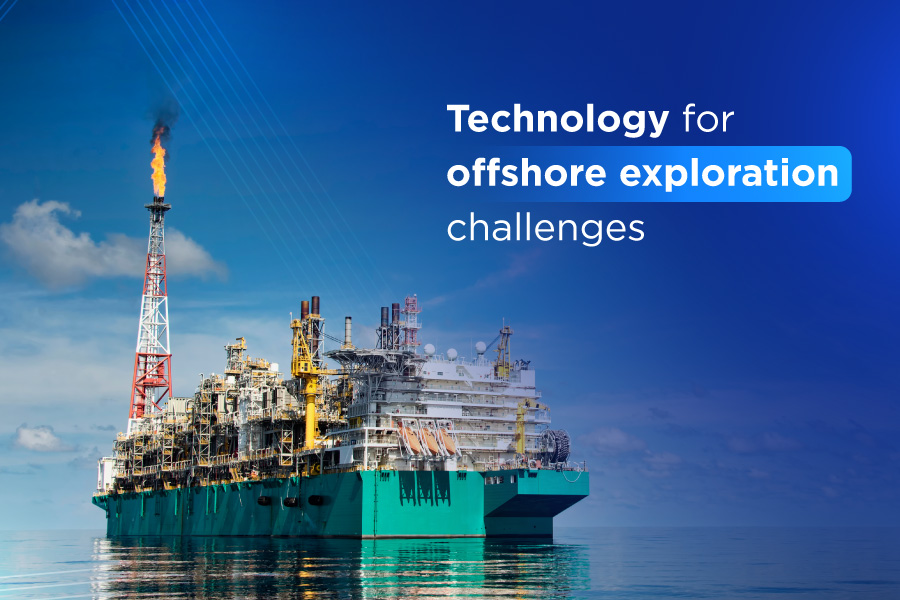
Hundreds of kilometers off the coast, aboard colossal platforms floating over waters thousands of meters deep, processing high-pressure hydrocarbons and managing highly flammable environments leave zero room for error. Behind the uninterrupted operation of these offshore structures lie advanced control and safety systems.
The history of automation in the Brazilian Oil and Gas sector is integral to the evolution of the country’s exploration capabilities. It is precisely at this intersection of engineering and high technology that Altus emerges.
Founded in the early 1980s as a university project, we outperformed multinationals to become a benchmark in the supply of automation solutions for deep and ultra-deepwater exploration.
From the university to the first offshore steps
1980s: the birth of a nacional technology
The history of Altus officially began on October 26, 1982. At a time when Brazilian industry relied almost exclusively on imported equipment, the idea of developing PLCs using 100% domestic technology seemed bold.
The first major milestone for Altus occurred in 1984 with the launch of the AL Series. Compact and affordable, this series marked the entry of domestic automation into industrial plants. During that decade, equipment programming was performed in an MS-DOS environment using AL-3832 software alongside portable programming units, a pioneering approach to integrating a dedicated screen for direct command entry on the factory floor.
1990s: conquering the Campos Basin and high availability
As the Campos Basin consolidated itself as the country’s main oil field during the 1990s, exploration in increasingly deeper waters began to demand fault-tolerant equipment and redundant architectures.
In 1991, Altus introduced the AL-2000 Series to the market, featuring multiprocessing and deterministic connectivity over an RS-485 bus via the ALNET II network.
The highlight of this generation was the AL-2017 CPU, a controller focused on high availability that featured automatic, bumpless switchover from the primary unit to the standby in the event of a failure, alongside memory synchronization. This architecture opened the doors of the Campos Basin to Brazilian technology, enabling domestic controllers to take command of the first critical processes on offshore oil production platforms.
Read the full history of our PLCs: 4 decades of innovation: discover Altus’ pioneering role in the Brazilian industry
2000s: Garoupa and the Amazon challenge
In 2001, the launch of the Ponto Series marked the introduction of embedded web servers and native HART protocol support directly within the controller architecture. This enabled technical diagnostics and process supervision to be accessed from anywhere in the plant via standard Ethernet networks.
This innovation was decisive for the automation of the Garoupa platform in the Campos Basin, one of the most complex and iconic offshore installations in Petrobras’ history. In the onshore domain, the versatility of Altus systems was put to the test along the Urucu-Manaus Gas Pipeline.
We were responsible for engineering and deploying the automation, instrumentation, electrical, and telecommunications systems across 662 kilometers of pipeline cutting through the heart of the Amazon Rainforest. Concurrently, at the Bahia Unit (UN-BA), we led the complete modernization of the control systems for the Carmo, Rio Taquipe, and Almeida Oil Gathering Stations.
2010s: the pre-salt and one of the largest contracts in nacional automation
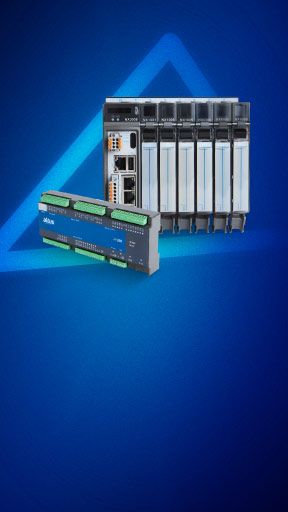
The discovery of massive pre-salt reserves demanded a level of processing scale and reliability unprecedented in the industry. In response to this demand, Altus developed the Nexto Series, an automation ecosystem built on high-performance RISC processors and a deterministic Ethernet-based bus, capable of managing up to 40,000 control points with execution times measured in microseconds.
In June 2011, this development culminated in the signing of the largest contract in Altus’ history: a R$ 115 million deal secured with Petrobras. Altus was selected to supply the Control and Safety System for the first eight Floating Production Storage and Offloading units built to operate at scale in the Santos Basin pre-salt layer, known as the “Replicant FPSOs” (P-66, P-67, P-68, P-69, P-70, P-71, P-72, and P-73).
Simultaneously, Altus undertook the development of systems for two other major units in the Campos Basin: the P-58 and P-62 FPSOs. On each of these platforms, the Altus system was engineered to integrate five subsystems vital to offshore operations:
Production and utilities control and monitoring: Supervision of oil processing, gas dehydration and compression, and power generation.
Production system shutdown: Automated emergency shutdown of process units upon detecting operational anomalies.
Fire and gas detection: Preventive monitoring and actuation of fire suppression systems.
Hull control and monitoring: Supervision of operational variables and utility systems located within the vessel’s hull.
Emergency hull shutdown: Preventive isolation and emergency shutdown of the vessel’s marine systems.
Consolidating the partnership with Petrobras
The ongoing partnership between Altus and Petrobras played an essential role in Brazilian industrial automation. Historically dominated by major international conglomerates, the oil infrastructure market required approval through rigorous audits and international compliance. Selecting Altus technology to equip these vessels demonstrated that Brazilian engineering possessed the maturity required to meet demanding offshore requirements.
Rather than importing off-the-shelf, inflexible solutions, the close collaboration between Altus engineering teams and Petrobras centers enabled the development of customized architectures. Key outcomes of this partnership included direct on-site support for onshore commissioning teams at shipyards and the continuous presence of offshore embedded engineers dedicated to monitoring and assisted operations. Units such as the P-66, which quickly ranked among Brazil’s most productive platforms, alongside the P-68, P-69, and P-70, achieved record operational efficiency metrics running on our architecture.
Today, Altus technology automates approximately 18% of Brazil’s total oil and gas production. We are also present in roughly 30% of total Brazilian Pre-Salt production, with active operations across 27 offshore platforms, a footprint representing about 3% of all operating FPSOs worldwide.
By combining technological research, engineering capability, and strong adaptability, Altus built a legacy reflected today in the performance of Brazilian oil basins and its established presence in the global market.