






In 2021, JBS, the world’s largest meat processor, suffered a massive ransomware cyberattack carried out by the cybercriminal group REvil.
The incident completely paralyzed cattle and swine slaughtering operations at the company’s subsidiaries in the United States, Canada, and Australia, halting facilities responsible for approximately 20% of the U.S. meat supply.
Faced with the risk of supply shortages, the deterioration of perishable inventory, and the complexity of restoring systems, the company decided to pay an $11 million ransom in Bitcoin to resume operations. Total costs, ranging from the shutdown to remediation, were estimated in the hundreds of millions of dollars.
Analyses revealed that the initial breach into the corporate environment occurred months earlier, between February and March 2021, through compromised credentials and vulnerabilities in remote access systems and VPNs. Moving from the IT network, the criminals exfiltrated data and maneuvered undetected. Although the encryption primarily targeted administrative servers and systems, physical plant operations had to be suspended: without integration into the IT systems responsible for batch tracking, weighing scales, and dispatch logistics, keeping the shop floor and PLCs running was unfeasible.
This episode shatters the notion that cyberattacks only affect technology companies, financial institutions, or massive conglomerates. Manufacturing and infrastructure industries are also prime targets, as every hour of halted production incurs steep financial losses and escalates pressure on management. The JBS case demonstrates pragmatically that cybersecurity must be embedded into daily operations to ensure business continuity.
Why industrial cybersecurity remains a challenge
Implementing cybersecurity measures in Automation Technology (OT) environments faces structural and cultural challenges distinct from traditional IT environments. Understanding these factors is essential to building protection strategies adapted to each business’s reality. Here are the key aspects:
| Operational challenge | Operational reality | Cybersecurity challenge |
| Asset lifecycle | Equipment designed to operate for 10 to 25 years. | Presence of legacy PLCs lacking native encryption or authentication features. |
| Availability vs. Security | Continuous operation where unplanned downtime generates heavy losses. | Resistance to applying patches and rebooting operational controllers. |
| The Air Gap myth | Reliance on the belief that protection stems from the lack of a direct internet connection. | Neglect of vectors such as maintenance laptops, flash drives, and 4G modems. |
| Inventory management | Industrial networks that expand over the years. | Lack of visibility over existing IP addresses, firmware versions, and access points. |
| T/OT convergence | Continuous integration of production data with ERP, MES, and cloud systems. | Exposure of unencrypted industrial protocols to corporate networks. |
You might be wondering what an “air gap” actually is right now. An air gap is the practice of maintaining absolute physical isolation between the industrial network and machinery, keeping everything entirely disconnected from the internet and other untrusted networks, without physical or wireless links. This setup creates the illusion that the system is immune to remote attacks and ransomware; however, in modern plants, this isolation has become largely theoretical.
Even in networks without a direct internet connection, the physical barrier is breached during technical interventions. Connecting laptops to modify control logic, using USB flash drives to extract data, and temporarily installing cellular routers for remote support create communication pathways that bypass isolation entirely.
Furthermore, the friction between availability and security often hinders the adoption of preventive measures. Nevertheless, applying recognized frameworks, such as the ISA/IEC 62443 series of standards, demonstrates that well-structured, pre-evaluated preventive actions mitigate intrusion risks without demanding drastic changes or unnecessary downtime in the production process.
10 practical cybersecurity measures for PLC users
Protecting industrial systems requires simple yet rigorous preventive routines. The following checklist presents ten practical recommendations tailored to the day-to-day operations of automation and maintenance teams.
1. Replace factory credentials and strengthen authentication
Changing the default passwords provided by manufacturers on PLCs, HMIs, switches, and gateways must be done before equipment goes into production. Generic or shared accounts among operators and service providers must also be eliminated. Factory credentials are public and frequently exploited in automated attacks. Furthermore, creating individual accounts within the programming software makes it possible to identify who made each parameter change on the controller.
2. Maintain an updated asset inventory
Teams must catalog and continuously update records of all devices connected to the control network, including brand, model, firmware version, IP address, MAC address, and physical location. A lack of visibility hinders the identification of vulnerable equipment and delays incident response. A practical example is registering the addition of any new communication module or PLC prior to its integration into the main panel.
3. Control removable media and maintenance laptops
Establishing procedures for using USB flash drives, memory cards, and engineering laptops on the plant network is essential. External devices must undergo antivirus scans before connecting to the USB ports or Ethernet interfaces of PLCs. Unaudited maintenance computers are among the primary vectors for transmitting malware into isolated environments. As a rule of thumb, service providers should only use workstations validated by the internal security team.
4. Revalidate and secure remote access
Remote access to automation systems for technical support must be strictly controlled. Direct connections via remote desktop software exposed to the internet should be eliminated, enforcing the use of VPNs with encryption and multi-factor authentication (MFA). In daily plant operations, remote connections should remain disabled by default, activated under supervision only for the duration of requested maintenance.
5. Segment the network
The communication infrastructure must be divided into logical and physical zones, isolating the automation network from the corporate network using firewalls and managed switches. Applying the Zones and Conduits concept, as defined by the ISA/IEC 62443 standard, restricts data flow between sectors. This approach prevents a malicious email on the administrative network from spreading into the PLC network.
6. Disable unused services, ports, and protocols
Unused physical ports on switches must be blocked, and unnecessary network services on the CPU, such as unused web servers, FTP, or unencrypted legacy protocols, need to be disabled. Reducing entry points minimizes the surface area exposed to malicious attacks. Before disabling any service, test in a staging environment to verify that the action will not disrupt data exchange between the PLC and supervisory systems.
7. Keep backup routines updated and tested
Maintaining updated backups of controller projects is indispensable, including variable tables, IEC language programs, network parameterizations, and HMI configuration files. Copies should be stored in secure locations disconnected from the main network. Periodic restoration tests ensure that, in the event of hardware failure or unauthorized program modification, the production line can be restored without programming from scratch.
8. Enable and monitor log records
Whenever the equipment permits, enable event logging on the controller and supervisory software. Continuous log monitoring enables the identification of off-hours access, failed login attempts, and unauthorized changes to control logic. Regular analysis of these records helps detect suspicious behavior before it causes operational downtime.
9. Plan firmware and software updates
Systematically track security patches and firmware updates released by PLC manufacturers. Never apply updates directly to equipment in continuous operation without prior evaluation. Best practices dictate testing new firmware on a test bench or during planned maintenance shutdowns, validating project compatibility before final deployment to the panel.
10. Train the team and establish procedures
Train operators, engineers, and maintenance teams on practices such as proper password management and the risks associated with removable media. This preparation is essential to sustain cybersecurity measures over time. Additionally, guide employees on how to act when observing suspicious equipment behavior, such as unscheduled reboots or atypical communication failures. Clear operating procedures ensure that everyone executes security protocols consistently.
How Altus PLCs contribute to your operation’s cybersecurity
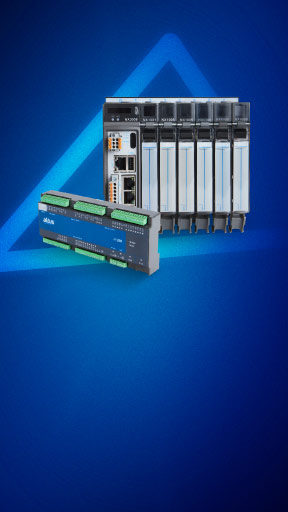
When developing applications aligned with modern industrial demands, using controllers with embedded security features simplifies the architecture and strengthens protection across the plant environment. This is the case with our Nexto NX, Nexto XF, and Nexto XP controllers, which incorporate native cybersecurity functionality.
Integrated firewall
Nexto System CPUs feature a firewall integrated directly into the operating system. It enables teams to configure traffic rules and define which services and communication protocols, such as Modbus TCP and OPC UA, can pass through each Ethernet port on the CPU. In practice, the firewall blocks unauthorized packets coming from the corporate network, preventing them from reaching the PLC’s control channel.
Native VPN Support
To protect long-distance communications and remote technical support, several models in the Nexto family feature OpenVPN embedded directly into the CPU. This capability allows engineers to establish a point-to-point, private, encrypted tunnel between the engineering computer and the controller without installing external routers or exposing the PLC to public networks. As a result, application data and diagnostics travel fully protected against interception.
User management and permission control
With the Mastertool programming platform, the environment used across Altus controllers, teams can enforce strict authentication policies and access controls. The system permits creating user accounts with tiered privileges, specifying who is authorized to read the project, modify operational parameters, upload and download code, or alter network configurations. Furthermore, the CPUs support SNMPv3, ensuring authenticated and encrypted safe network management, alongside secure connections for direct data logging to SQL Server databases.
Code signing and integrity verification
To guarantee that the application running on the controller has not been tampered with, Altus systems utilize mechanisms based on the X.509 digital certificate standard. This feature allows IEC libraries to be digitally signed and application code to be transferred via encryption, ensuring the CPU accepts only programs signed and validated by the authorized engineering environment. This prevents the execution of unauthorized logic altered by malicious third parties.
Alignment with the ISA/IEC 62443 Standard
The native features available in Altus controllers fulfill the fundamental requirements established by the ISA/IEC 62443 international reference standard:
| ISA/IEC 62443 requirement | Altus PLC features | Operational benefit |
| FR1 – Identification and authentication control | User profiles in Mastertool and support for SNMPv3. | Guarantees precise identification of who accesses the controller. |
| R2 – Use Control | Tiered permission levels for modifying control logic and operational parameters. | Restricts critical modifications strictly to authorized technicians. |
| FR4 – Data confidentiality | Use of X.509 digital certificates and project encryption. | Protects source code and proprietary industrial trade secrets. |
| FR5 – Restricted data flow | Embedded CPU firewall and native OpenVPN support. | Isolates control traffic and secures remote access pathways. |
| FR6 – Timely response to events | System diagnostics (OTD) and event log recording. | Facilitates rapid identification of anomalies and unauthorized access attempts. |
It is important to emphasize that the presence of these features on the PLC does not, by itself, eliminate the need for an ongoing security program. The controller is only one piece of a defense-in-depth strategy, which also encompasses process policies and continuous team awareness.
Read more: Why risk analysis is the first step to protecting your plant
To deepen your understanding of best practices for the manufacturing sector, consult the Cybersecurity Policy Manual, a document prepared by our R&D team based on the ISA/IEC 62443 standard. We also recommend following the updates published on our Cybersecurity page. These resources help structure increasingly protected operational environments.